
Retirement parties can go two ways: a lovely, grounding moment that makes someone feel deeply appreciated, or a well-intentioned blur of awkward speeches and cold appetizers. The difference is not budget or Pinterest-level decor. It is thoughtfulness, pacing, and a few decisions made with the retiree at the center.
This guide will help you host a retirement send-off that honors what they built, who they were to others, and what they are stepping into next. Connection is always more important than perfection, especially when the guest of honor has spent decades showing up for everyone else.

Start with the heart
Before you book a room or choose a menu, ask one question: What do we want them to feel? Appreciated? Proud? Relieved? Seen? Excited for what is next? Your answers become your planning filter.
Pick a style that fits
- Open-house drop-in: Best for workplaces and large circles. Low pressure and easy to scale.
- Hosted brunch or lunch: Warm, practical, earlier in the day, and often easier for older relatives.
- Cocktail reception: Great for mingling, a short formal program, and a more polished vibe.
- Intimate dinner: Best for someone who dislikes attention. Focus on stories, not spotlights.
- Activity-based: Golf, bowling, cooking class, museum visit, or a garden party. Perfect when standing around is not their thing.
Confirm the basics early
- Who is hosting? One clear point person avoids crossed wires.
- Who is paying? Decide up front: company, department collection, family, or shared contributions.
- Is it a surprise? Many retirees prefer being consulted. If you do surprise, keep it gentle and predictable.
- Any sensitivities? Health concerns, mobility needs, sobriety, dietary restrictions, strained relationships, or boundaries around workplace stories.
- Any cultural or religious considerations? Food, alcohol, and gift customs vary. A quick check-in can prevent accidental awkwardness.
Planning timeline
A simple planning rhythm keeps you calm and prevents last-minute scrambling.
6 to 8 weeks out
- Pick the date and time, confirm with the retiree or their spouse/partner if appropriate.
- Choose the format and venue.
- Set a budget range and guest count estimate.
- Assign two to three helpers: food lead, memory collection lead, and day-of logistics lead.
4 weeks out
- Send invitations and start collecting RSVPs.
- Order or plan food and beverages.
- Collect photos, notes, and stories for a memory display or book.
- Identify speakers and give them a time limit (truly).
2 weeks out
- Finalize headcount and menu.
- Confirm AV needs: microphone, speaker, slideshow screen, extension cords, and a power strip.
- Purchase decor and supplies.
- Draft the run-of-show and share it with key helpers.
48 hours out
- Print signage, photos, and any prompts.
- Pack a party kit: tape, scissors, safety pins, lighter, stain remover, phone chargers, pens, a backup USB for slides, and an extra extension cord or power strip.
- Confirm arrivals: catering, cake, floral, room access.
Invitations
Your invitation sets expectations and avoids confusion about gifts, timing, and tone.
What to include
- Why you are gathering: “Join us to celebrate Morgan’s 32 years in nursing and toast her next chapter.”
- Format: Drop-in window or start and end times.
- Location details: Parking, accessibility notes, room name.
- Dress code: One line is enough.
- Gift guidance: See below for tactful wording.
- Hybrid option (if needed): A simple link or note like “A brief virtual toast will be available at [time].”
Polite gift wording (choose one)
- No gifts: “Your presence is the gift. If you would like to share a note or favorite memory, we will have a card box.”
- Group gift: “We are organizing a group gift. If you would like to contribute, please contact [name] by [date].”
- Optional: “Gifts are never expected. Cards and well-wishes are warmly welcome.”
Venue and setup
Retirement celebrations are about conversation. Pick a space that supports it.
Great venue options
- Home or backyard: Most meaningful for family-centered retirees, and budget-friendly.
- Community room: Libraries, community centers, and apartment clubhouses can be hidden gems.
- Restaurant private room: Simplifies food and cleanup. Ask about minimums and sound levels.
- Office common area: Convenient for colleagues, but elevate it with linens, lighting, and a clear program plan.
- Favorite place: A brewery patio, a park pavilion, a museum cafe. When it feels like them, everyone relaxes.
Layout that works
- One clear welcome point: Guest book, cards, name tags if needed.
- Food and drink off to the side: Prevents crowding where the action should be.
- Seating mix: A few tables for older guests plus room to mingle.
- A quiet corner: A decompression spot for the retiree and close family.
Quick accessibility check
- Getting in: Step-free entry, ramps or elevators, door width, and nearby accessible restrooms.
- Getting around: Clear pathways, sturdy chairs with backs and arms, and a few seats that are easier to stand from.
- Hearing and sound: Use a microphone if the group is larger than you think. Keep music low enough for conversation.
- Parking: Reserve a close spot for the retiree if you can.
- Quiet space: Make it easy to find with simple signage.
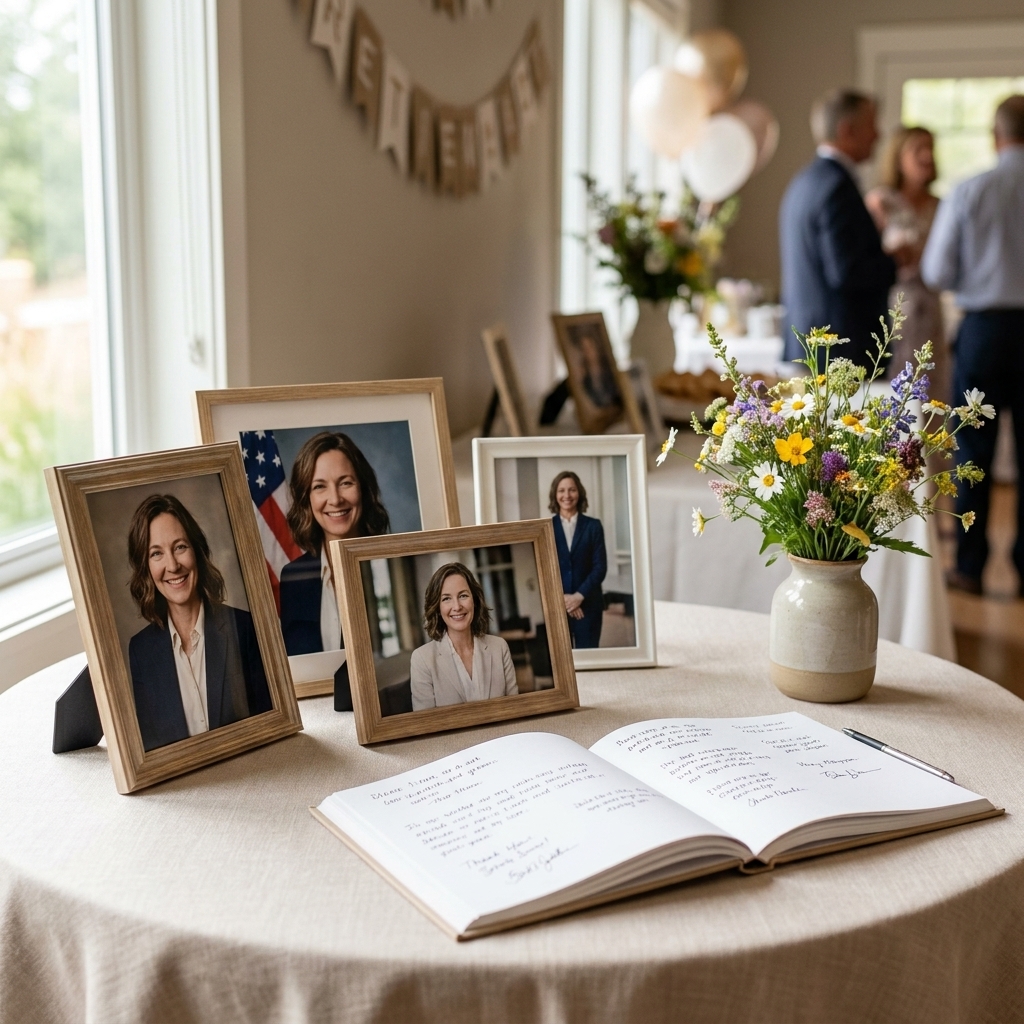
Make it personal
Meaning does not come from more stuff. It comes from the right details.
1) A legacy display
Show their work and impact without turning the party into a resume recitation.
- A small photo timeline: first day, big milestones, favorite colleagues.
- A greatest-hits board: accomplishments, awards, funny workplace moments (keep it kind).
- Meaningful items: a well-loved tool, a name badge, a retirement certificate, a book they always recommended.
2) A words-from-everyone keepsake
This is the piece that makes people cry in the best way.
- Advice and wishes cards: Prompts like “I will always remember…” and “In your next chapter, I hope you…”
- Memory jar: Guests drop in short notes. The retiree reads them later when the house is quiet.
- Video messages: Especially helpful for far-away colleagues. Keep each clip under 20 seconds.
3) A nod to what is next
Retirement is not just an ending. Add one touch that welcomes the future.
- A map with pins for upcoming travel plans.
- A retirement bucket list sign guests can add to.
- A mini new-routine basket: gardening gloves, a library tote, a pickleball set, watercolor paper.
Hybrid-friendly option
- Virtual toast: Stream just the 10 to 15 minute program portion so remote teammates can join without sitting through a full party on a screen.
- Digital memory book: A shared folder or form where people upload one photo and one note. Print it later if you want a physical keepsake.
Food and drink
Choose a menu that feels celebratory but is easy to eat while chatting.
Reliable menu formulas
- Brunch: Quiche or frittata, pastries, fruit, coffee, sparkling juice bar.
- Lunch: Sandwich and salad spread, soup in a slow cooker, cookies or sheet cake.
- Cocktail: Two to three hearty appetizers, one substantial station (tacos, sliders, pasta), and one dessert.
Signature toast, with a smart NA option
A simple signature drink makes the event feel intentional. Pair it with a nonalcoholic version that is equally special.
- French 75 and a sparkling lemon tonic.
- A classic old fashioned and an orange-cherry iced tea.
- Rose and a chilled hibiscus lemonade.
Etiquette note: If the retiree does not drink, follow their lead. A gorgeous NA toast is still a toast.

Run-of-show
Even casual parties benefit from a light structure. It keeps things warm, short, and easy for the guest of honor.
Sample schedule for a 2-hour party
- 0:00 to 0:30 Guests arrive, mingle, sign the guest book, grab a drink.
- 0:30 to 0:45 Welcome and first toast.
- 0:45 to 1:15 Food served, slideshow on a loop, casual visiting.
- 1:15 to 1:30 Speeches (2 to 4 speakers, 2 minutes each).
- 1:30 to 1:45 Gift presentation or group card.
- 1:45 to 2:00 Final toast and open mingling.
Quick timing note: Workplace drop-ins often run 60 to 90 minutes. Family dinners can run longer. Match the schedule to the group’s attention span and the retiree’s energy.
Keep speeches from dragging
- Pick one emcee to introduce speakers and keep time.
- Give speakers prompts: one story, one thank you, one wish.
- Set a visible two-minute timer. It feels firm, but it saves the room.
- Place speeches before dessert. People are still attentive.
What to say
If you have ever panicked with a microphone in your hand, this is for you. A good retirement toast is not long. It is specific.
The 90-second toast
- Start: Name them and name the moment. “Today we are celebrating Sam and his 28 years with the district.”
- Middle: Share one concrete example of who they were at work. “Sam was the person who…”
- Impact: Say what changed because of them. “Because of you…”
- Future: Welcome what comes next. “I cannot wait to see you…”
- Toast: Simple and sincere. “To Sam, with gratitude and joy.”
If you are unsure what to share, borrow this question: “What did they make easier for everyone else?”
Gifts
Retirement gifts land best when they reflect the person, not the job title. Practical can still be sentimental.
Thoughtful gift ideas
- A memory book with notes and photos from colleagues, friends, and family.
- A framed group photo taken at the party, printed afterward and mailed.
- An experience: a cooking class, a weekend getaway contribution, theater tickets.
- Tools for a hobby: quality gardening shears, a birding guide, a bread lame and banneton, a watercolor set.
- Legacy item: a watch engraving, a locket, a leather journal, a personalized recipe binder.
Group gifts done well
Assign one organizer, set a firm contribution deadline, and keep it discreet. The goal is generosity, not pressure. When possible, pair the group gift with a stack of handwritten notes so the retiree receives both support and sentiment.
Work and family dynamics
Retirement parties can pull together coworkers, old friends, and family members who have never been in the same room. A little planning prevents awkwardness.
Workplace policy check
- Confirm any HR or office policies on fund collections, gifting limits, and use of company email lists.
- If alcohol is involved, verify what is allowed at the venue and by the employer, and plan robust nonalcoholic options.
- Make accessibility and accommodations part of the plan, not an afterthought.
If the workplace has politics
- Keep remarks focused on the retiree, not company grievances.
- Avoid inside jokes that make others feel excluded.
- If there was conflict, do not resolve it at the microphone.
If family relationships are tense
- Create a seating plan for a meal, even a loose one.
- Ask one trusted person to run gentle interference if needed.
- Give the retiree a private moment before speeches so emotions do not boil over.
Budget-friendly upgrades
You can create a beautiful send-off with simple materials and a clear plan.
- One floral moment: a single larger arrangement on the welcome table, then bud vases elsewhere.
- Lighting: warm string lights or LED candles instantly soften a space.
- Printed photos: inexpensive and deeply personal. Tape them neatly or use simple frames.
- Coordinated servingware: even disposable can look polished when it matches.
- A tidy timeline: the most luxury feeling is a party that flows.

Day-of checklist
Before guests arrive
- Confirm food delivery or start times for homemade items.
- Set up welcome area: guest book, pen, card box, name tags if needed.
- Test audio and slideshow.
- Place reserved seating for retiree and key family.
- Stash the party kit and extra trash bags.
During the party
- Assign someone to keep the retiree hydrated and fed.
- Follow the run-of-show, but stay flexible.
- Designate a photo person for 15 minutes of group shots.
After
- Pack up cards and keepsakes first, before leftovers.
- Send a few key photos to the retiree within 24 hours.
- Share a thank-you message to contributors and speakers.
FAQ
How long should a retirement party be?
For many groups, two hours is the sweet spot. It is long enough for meaningful conversation, short enough to keep energy up. Workplace drop-ins are often shorter, and dinner parties can run longer.
Is it okay to ask people to contribute to a group gift?
Yes, as long as it is optional, discreet, and managed by one person. Make the contribution process easy and avoid public tracking.
What if the retiree says they do not want a party?
Believe them, then scale down. Offer an intimate brunch, a small toast at work, or a memory book without a gathering. Honor their comfort, not your idea of what is proper.
What is the most meaningful thing guests can do?
Write something specific. A short note that says what they did and how it mattered will outlast any centerpiece.
A final thought
The best retirement send-offs do not try to sum up an entire career. They simply reflect it back: the steady effort, the relationships built, the quiet ways they made life better for others. If you can help your guest of honor feel recognized and loved, you have done it right.