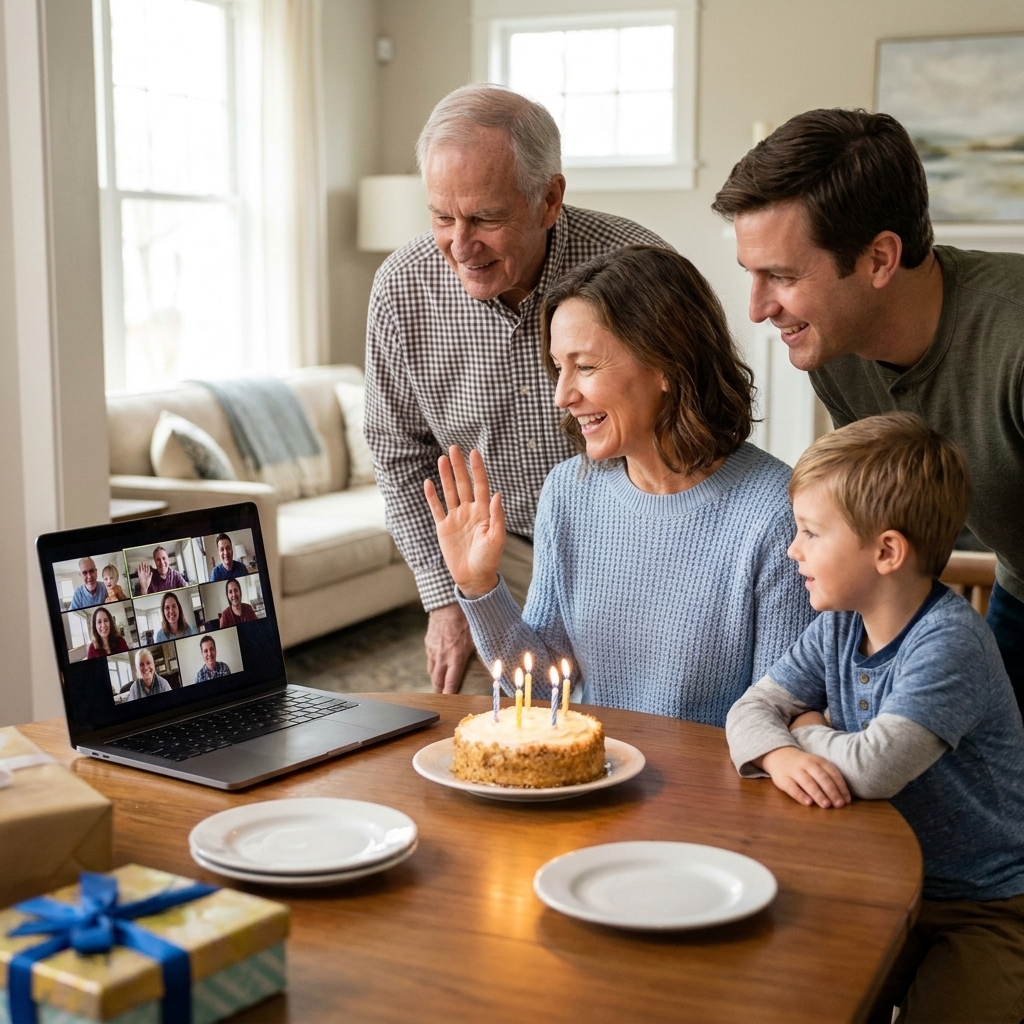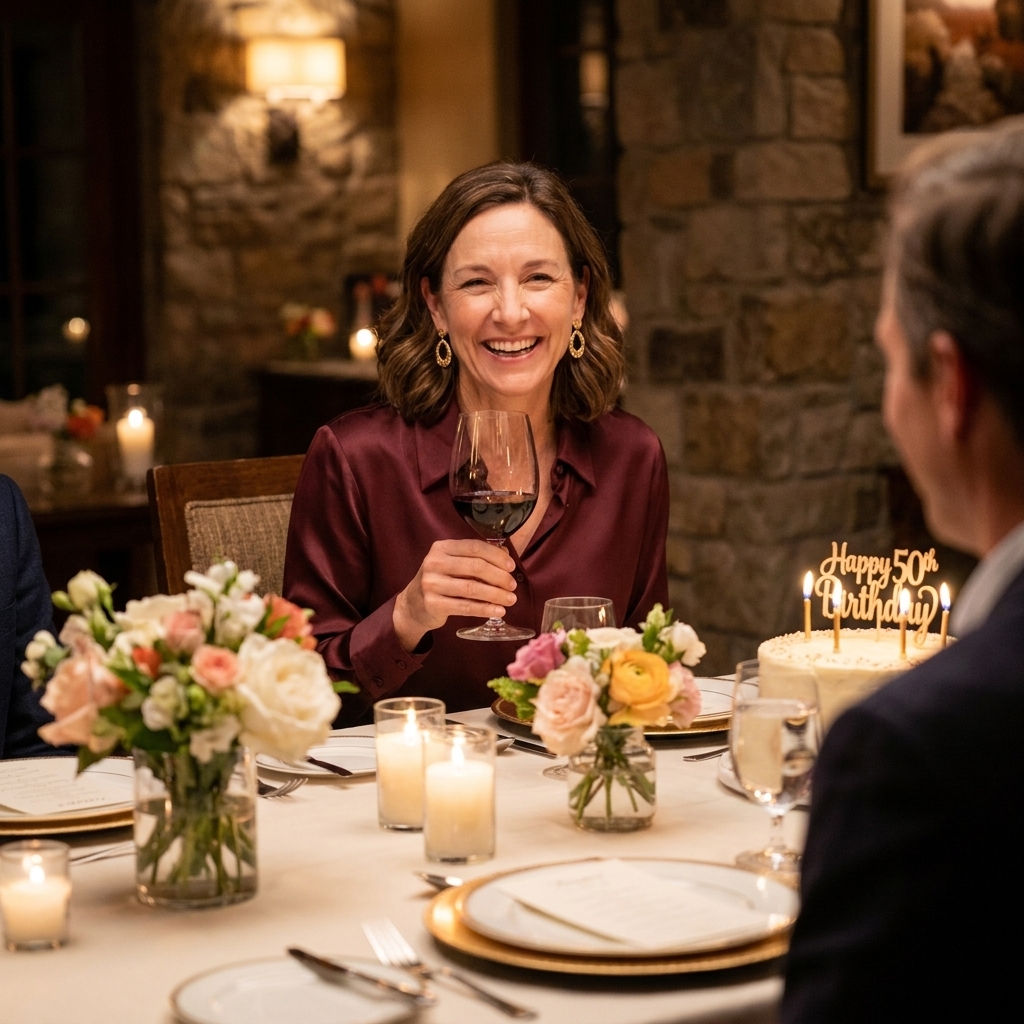
Turning 60 is one of those birthdays that deserves more than a card and a cake. It deserves a record of a life in motion, the people who shaped it, and the small moments that still make everyone laugh at the dinner table. A collaborative memory book does exactly that. It’s part photo album, part love letter, and part family history.
The best part is this: you don’t need to be a designer, and you don’t need perfect materials. You just need a simple system for collecting stories, a little structure for the book, and a plan for pulling it all together on a reasonable timeline.
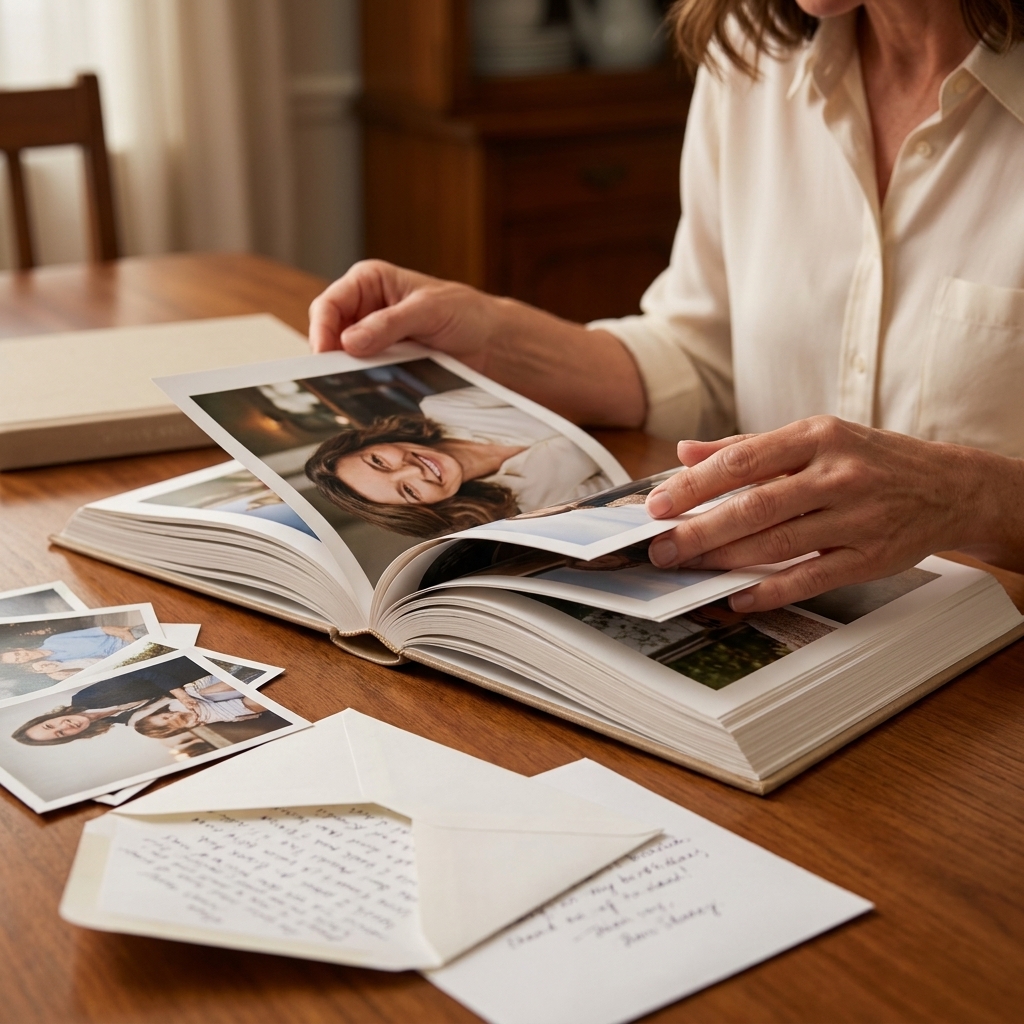
Start with a clear plan
Before you ask anyone for photos or letters, decide what you’re making and how it’ll be gifted. Clarity up front makes it much easier for friends and family to contribute quickly.
Choose a format
- Printed photo book (a common choice): Clean, durable, easy to gift, and easy for the recipient to revisit.
- Binder or scrapbook style: More tactile, great if you want to include original letters, memorabilia, or recipe cards.
- Digital version only: Wonderful for far-flung families, but I still recommend printing at least one copy for the honoree.
Set your definition of done
To keep the project joyful instead of endless, decide on a page target. For a 60th birthday, I like:
- 30 to 50 pages for a small family group
- 60 to 90 pages if you’re collecting contributions from lots of friends and extended family
If you have a big community, you can still keep the book manageable by limiting each contributor to one page or one letter.
Build a realistic timeline
Here’s a schedule that works even if you’re balancing work, kids, and a million other life things:
- 4 to 6 weeks out: Pick a tool, decide structure, write your request message
- 3 to 4 weeks out: Collect photos and letters, send one reminder
- 2 weeks out: Design and edit, confirm names and dates
- 10 to 14 days out: Order the printed book (or start printing for a binder)
- Week of: Add finishing touches, wrap, and plan the reveal
Print timelines vary a lot by vendor, shipping speed, and season, so check the current production and delivery estimate and add a buffer if you can.
If you’re tight on time, reduce scope, not sentiment. A smaller book with heartfelt notes beats a larger book that arrives late and stressed.
Gather photos without chaos
Photo collection is usually the sticking point, not because people don’t want to help, but because they don’t know what you need or how to send it. Give them a simple path.
Create one drop spot
Pick a single place where everything lands. Any of these work well:
- Google Drive folder with an upload link
- Dropbox file request (often lets people upload without needing access to your account, though settings and requirements can vary)
- iCloud shared album for Apple-heavy families
- Email only if your group is small, since attachments get messy fast
Name your folder something clear like “Pat’s 60th Memory Book” and add subfolders: “Photos,” “Letters,” and “Not Sure.” People love a “Not Sure” option.
Send specific photo prompts
Vague requests get vague results. Instead, offer ideas that unlock memory:
- A photo that captures their signature laugh
- A moment that shows them in their element (hosting, gardening, coaching, teaching)
- Your favorite holiday or tradition together
- A photo from their 20s or 30s that tells a story
- A “then and now” pair if someone has it
Also give a simple limit. For example: “Please upload 5 to 15 favorites.” Limits are kindness.
Ask for captions right away
This is the difference between a pretty photo book and a meaningful one. Have contributors include:
- Who is in the photo
- Approximate year or life season
- Location (if they remember)
- One sentence about why it matters
If you only get “Me and Dad,” you’ll be playing detective at midnight. Ask for the details early.
Quick photo quality tips
- Ask for original files when possible (not screenshots or social downloads).
- If someone’s scanning prints, aim for 300 dpi or higher.
- If they’re taking a quick phone picture of a print, suggest bright, indirect light and a straight-on angle to reduce glare.
And yes, imperfect photos still belong. If it’s a meaningful moment, include it.

Collect letters that feel like a hug
Letters are where a 60th memory book becomes a keepsake. They don’t have to be long. In fact, short letters are often the most reread.
Make it easy to write
Include a few optional prompts so people aren’t staring at a blank screen:
- “One thing you taught me that I still use is…”
- “My favorite story about you is…”
- “A moment I felt loved by you was…”
- “Here’s what I admire most about how you live your life…”
- “If I could give you one wish for the next decade, it would be…”
Give a word range: 150 to 300 words is a sweet spot. It keeps the project inclusive and the book readable.
Offer three ways to submit
- Typed letter: easiest to paste into a design tool
- Photo of a handwritten note: most sentimental, especially from older relatives or kids
- Voice memo transcription: helpful for anyone who expresses themselves better aloud
If someone sends a long letter, don’t panic. You can feature a thoughtful excerpt in the book and tuck the full letter into an envelope for the honoree to read later.
Include a wish list of contributors
In every family, there are a few key people who might not respond without a nudge. Quiet best friends. A cousin who means the world but forgets deadlines. A former neighbor. Make a list early and assign outreach. One person shouldn’t chase everyone.
Add a quick privacy note
In your request, include a gentle line like: “Please only share photos and stories you’d feel comfortable reading aloud at the party.” If you’re distributing the book widely, be mindful with kids’ photos and anything sensitive.
My planning rule: the more sentimental the project, the more you need a simple system. Not to be rigid, but to protect the meaning.
Choose a structure that tells the story
Design goes faster when you have a clear framework. Here are three layouts that work beautifully for a 60th birthday.
Option 1: Timeline chapters
- Early years
- Teen years and first jobs
- Young adult life
- Career and community
- Family and traditions
- Recent joys and right now
- Looking ahead
Option 2: People-centered sections
- Partner and immediate family
- Extended family
- Childhood friends
- Work friends
- Community, faith, or hobbies
Option 3: Themes, not years
This is my favorite for someone whose life is defined by how they show up rather than by a neat timeline.
- The Host
- The Adventurer
- The Caregiver
- The Mentor
- The One With the Best Stories
Whichever you choose, start with an opening page that sets the tone. A short dedication, a favorite quote, or a snapshot of them doing something they love makes the book feel intentional from page one.
Tools that keep design simple
You don’t need a graphic design background. You need a tool that lets you drag, drop, and print with confidence.
Photo book platforms
- Shutterfly: very beginner-friendly with lots of templates
- Mixbook: flexible design options and, in my experience, reliably nice print results
- Artifact Uprising: minimalist, elevated look, great for a modern aesthetic
- Chatbooks: fast and simple, especially if you want a photo-forward book
Design-first tools
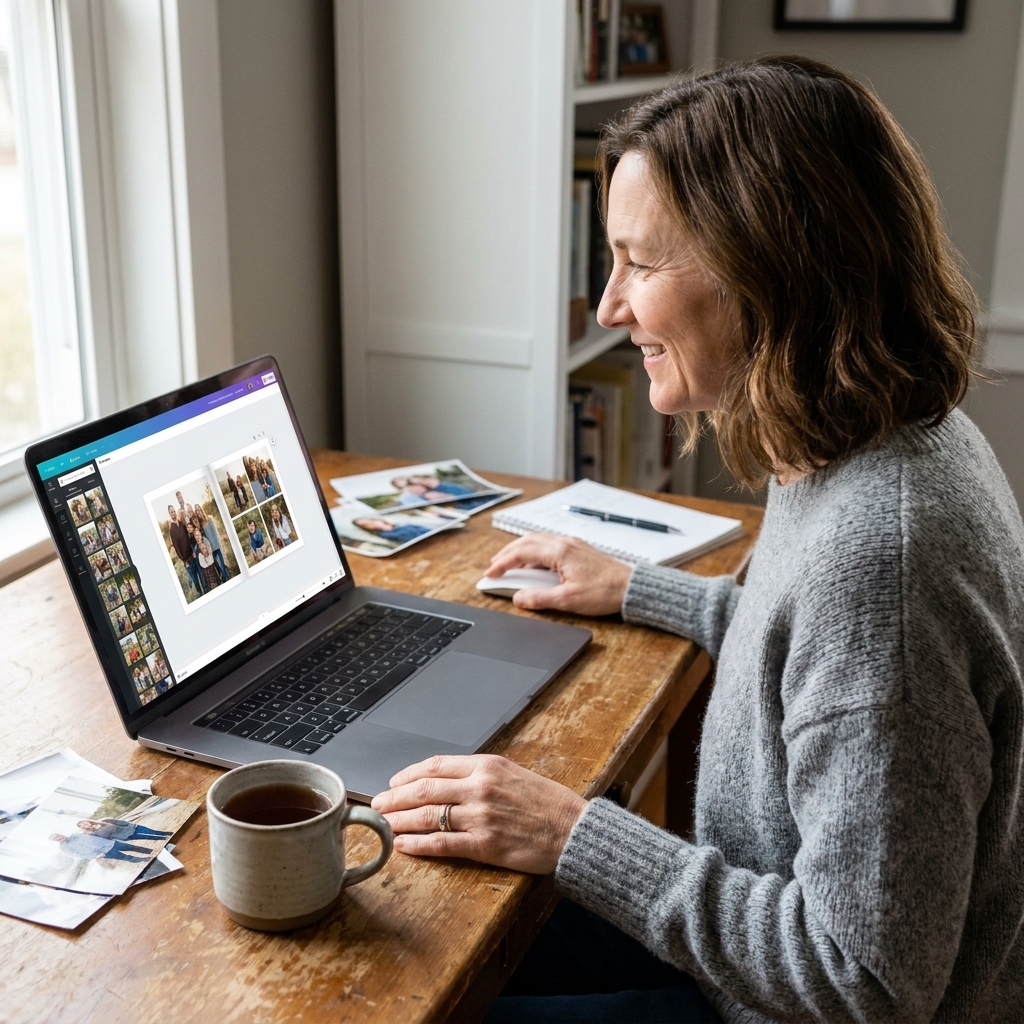
- Canva: easy collaboration, beautiful templates, great for mixing text and photos
- Google Slides or PowerPoint: surprisingly effective for page layout, then export to PDF for printing
My practical recommendation
If you want the easiest path to a printed book, start in a photo book platform. If you want multiple people to help lay out pages, start in Canva, then upload finished pages or a PDF to a printer.
Collaborate without the stress
Collaborative projects can feel like herding cats, unless you build in gentle guardrails. Here’s the system I used with my event planning clients when a whole family was contributing.
Assign roles
- Project lead: you, keeping the timeline and making final decisions
- Photo curator: one person to flag duplicates and find missing years
- Fact checker: someone who knows dates, spellings, and who is who
- Editor: a warm but firm reader who can trim for clarity and consistency
If you’re doing this solo, you can still “assign roles” by giving yourself one task per evening. One night for sorting photos, one night for letters, one night for layout.
Create a simple style guide
This isn’t about being precious. It’s about making the book feel cohesive.
- Use first names consistently (Grandma, Nana, or her name, but pick one)
- Decide how you’ll format dates (2001 vs. ’01)
- Pick 2 fonts max
- Choose a restrained color palette (2 to 4 colors)
- Set a readable minimum font size (especially if older eyes will be reading it)
Set boundaries for contributors
A quick line in your request keeps things smooth: “I may lightly edit for length and clarity, but I’ll keep your voice.” People appreciate the transparency, and it gives you permission to make the book readable.
Back up your work
Before you start heavy editing, download a local backup of the folder. Also consider a simple master doc for captions and credits so nothing gets lost when you’re moving pages around.
Design tips that keep it heartfelt
When people hear “memory book,” they often picture something formal. For a 60th, I like it to feel like the honoree is surrounded by friends in the living room. Warm, personal, and easy to flip through.
Use white space on purpose
Not every page needs to be full. White space lets emotional content breathe. A single photo plus a strong letter can be enough.
Mix old and new
Pair a childhood photo with a recent snapshot of them doing the same thing. Cooking, fishing, dancing, holding a grandbaby, cheering on a team. Those echoes across time are powerful.
Include small data
A few pages of tiny details make the book feel intimate:
- Favorite comfort meal
- Most repeated phrase
- Song that always makes them sing
- Best advice they give
- What they’re known for in the family
Add texture with memorabilia
If you’re designing digitally, you can photograph or scan meaningful items:
- A handwritten recipe card
- A postcard from a trip
- A ticket stub
- A note from a child
Keep it simple and genuine. Connection is always more important than perfection.
Printing and gifting
The finish matters, not because it needs to be fancy, but because you want it to last. A 60th birthday memory book will be picked up again and again.
Print choices for longevity
- Hardcover if the book is photo-heavy or will live on a coffee table
- Layflat binding if you have full-page photos or two-page spreads
- Matte pages for a soft, timeless look and easier reading of text
Order a second copy
If budget allows, order one extra. Keep it as a family archive copy. I’ve never met a family who regretted having a backup after a move, a spill, or years of rereading.
Plan the reveal
Present it in a calm moment, not in the busiest five minutes of the party. Consider:
- Gift it at the start of dinner, then let it pass around
- Gift it the morning of the celebration with coffee and a quiet read
- Have one person read a short excerpt aloud, then hand it over
A message you can copy
Feel free to adapt this. The warm tone matters. People respond when they feel invited into something meaningful.
Hi everyone, I’m creating a collaborative memory book for [Name]’s 60th birthday. If you’d like to be part of it, please send 5 to 15 favorite photos of you with [Name] and a short note (150 to 300 words) about a memory, what you admire, or what you hope for their next decade. If you prefer handwritten, you can write a note and send a clear photo of it. Please upload everything here by [Date]: [Link]. One request: only share photos and stories you’d feel comfortable having [Name] read and keep. Thank you for helping us celebrate a life that’s meant so much to so many.
Troubleshooting
People aren’t responding
Send one gentle reminder with a firm deadline and a clear promise: “Even one photo and three sentences is perfect.” Then follow up individually with your must-have contributors.
I have too many photos
Choose a hero photo for each decade or theme, then use the rest as smaller supporting images. Repetition isn’t bad. It shows a full life. Just avoid true duplicates.
The letters vary a lot in tone
That’s normal. You can group similar tones together and add brief section openers to smooth transitions.
I’m worried about sensitive dynamics
Keep the book focused on the honoree, not old conflicts. Avoid pages that rank relationships, rehash divorces, or spotlight one person at the expense of others. When in doubt, choose the kindest true story.
What makes it unforgettable
A 60th birthday memory book isn’t about documenting everything. It’s about reflecting back a life that mattered. The ultimate goal is simple: when they open it, they feel seen.
So keep your process organized, keep your tone warm, and remember that the most treasured pages are rarely the most polished. They’re the ones that sound like the people who love them.