A surprise anniversary dinner is not about tricking someone. It is about creating a moment that says, quietly and clearly, we see your love. The secret to pulling it off at home is the same secret behind most calm gatherings: decide what matters, plan backward, and make the day-of as simple as possible.
Below, you will find a clear timeline, guest communication scripts, and three elegant make-ahead menus that let you actually enjoy the surprise instead of sprinting through it.
Start with the why and the shape
Before you think about food, choose the emotional tone. This is what keeps your decisions easy when you are juggling secrets, timing, and a hot oven.
- Guest count: 6 to 12 is a lovely sweet spot for many homes. If your space is tight or your group is more of a “linger for hours” crowd, go smaller. If you have room and help, you can go bigger.
- Format: seated dinner (most classic), or a “cocktails first, dinner second” flow if you want more mingling.
- Reveal style: front door surprise, “walk into the dining room” surprise, or a slow reveal that begins with a toast.
- Meaningful anchor: one detail that nods to their story, like the dessert from their wedding, a song from their first dance, or a menu inspired by their honeymoon.
If you are torn between two ideas, choose the one that creates more connection and less stress. Perfection is not the point. Presence is.
Keep the secret
Pick one co-conspirator
Choose the person who can calmly text back, keep a straight face, and handle last-minute pivots. Give them real responsibility, not just excitement. Examples: running guest arrivals, managing the decoy plan, or keeping the guest of honor occupied.
Use one channel for guests
Do not scatter details across email, text, and social DMs. Start a group text thread (or a simple messaging group) labeled something neutral like “Sunday Dinner Logistics.”
- Golden rule: Ask guests to mute the thread and never mention it near the honoree.
- Second golden rule: Tell guests not to comment on social media about being “busy” or “excited for tonight.” It happens more than you think.
Set an arrival window and a cutoff
You need guests parked, inside, and quiet well before the honoree arrives. Give an arrival window that is earlier than you think, then name a hard stop for doorbells. I call it “freeze time,” meaning the no-doorbell cutoff when everyone is inside and the house goes quiet.
- Example: “Arrive 5:30 to 5:50 p.m. No doorbell after 5:55 p.m. Text me ‘here’ and I will let you in.”
Plan the decoy without overwriting it
The best cover story is simple and plausible. The more elaborate the lie, the more details you must remember, and the more likely someone slips.
- Easy decoys: “reservation for two,” “casual dinner at home,” “help me taste-test a new recipe,” or “we are swinging by to drop something off.”
- Avoid: fake errands with specific times and places. Too many moving parts.
Control the biggest giveaway: your calendar
If you share a digital calendar, do not block off “SURPRISE PARTY.” Use neutral language like “Dinner” or “Home project,” or leave the calendar open and let the decoy story carry.
Manage the door, the driveway, and the coat pile
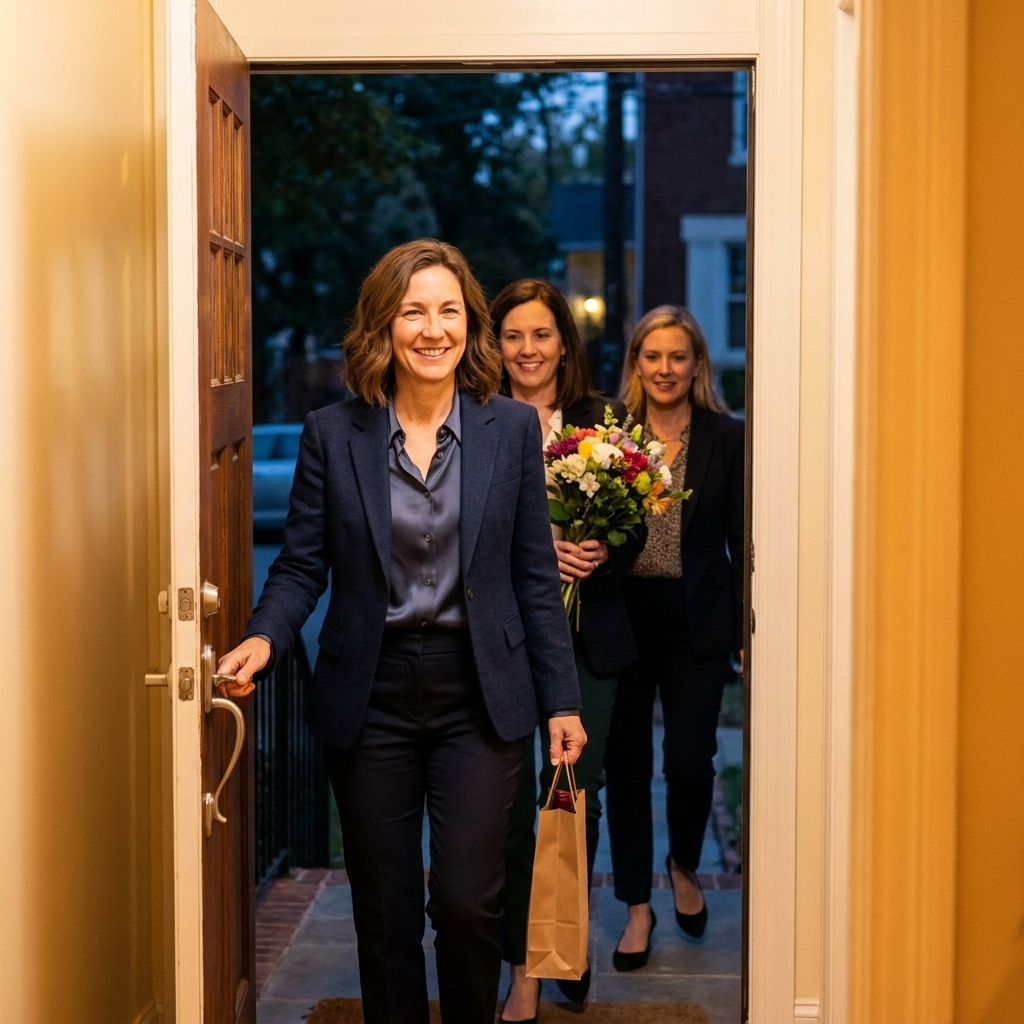
Surprises are often ruined by cars out front or a pile of shoes by the door.
- Ask guests to park around the corner when possible.
- Clear the entryway and designate a coat room or bedroom.
- Use background music at a normal volume to cover small noises, not to create a nightclub.
The timeline
Here is a framework I have used again and again when a surprise needs to land at a specific moment, even with late guests and melting desserts. Adjust the times to your start time and your home.
Two to three weeks before
- Choose guest list and verify any big conflicts.
- Pick menu and confirm allergies, dietary needs, and alcohol preferences.
- Decide the surprise moment location: entryway, living room, or dining room.
- Assign the co-conspirator and one extra helper if needed.
10 to 14 days before
- Invite guests with clear secret-keeping instructions.
- Plan seating (yes, even for 8 people). It prevents awkwardness and helps conversation.
- Order anything specialty: a specific wine, a favorite dessert from a bakery, flowers, or candles.
- Confirm the decoy plan with your co-conspirator.
One week before
- Finalize shopping list and prep list.
- Do a quick home traffic check: where people will stand, where drinks will be poured, where bags and coats will go.
- Choose a playlist that starts calm and grows warmer after the reveal.
- Make your bathroom guest-ready: hand soap topped up, a clean hand towel, extra toilet paper visible, trash emptied.
Two days before
- Deep clean the rooms guests will see (do not stress about the rest).
- Set out serving platters and label them with sticky notes for what goes where.
- Make any freezer-friendly items: cookie dough, a make-ahead dessert base, or stock for soup.
One day before
- Grocery shop and prep all produce.
- Set the table fully if you can, or at least lay out linens and place settings.
- Make make-ahead components: dressings, sauces, compound butter, dessert (or most of it).
- Chill wine and nonalcoholic options.
Day of (sample schedule for a 6:30 p.m. reveal)
- 12:00 p.m.: Reset kitchen, clear dishwasher, set out containers for leftovers.
- 1:00 p.m.: Finish any cold starters, prep salad, assemble charcuterie elements (wrap and refrigerate).
- 2:00 p.m.: Cook make-ahead main (braise, roast, or sauce). If it needs reheating, build in a gentle rewarm window earlier than you think so you are not racing the clock at reveal.
- 3:30 p.m.: Get yourself ready early. It is the best stress reducer I know.
- 4:30 p.m.: Light tidy, hide evidence, set up coat area, pour water into carafes.
- 5:15 p.m.: Turn on music, set out drink station, stage appetizer plates and napkins. If you are opening wine early, open reds now. Keep whites and sparkling chilled until serving.
- 5:30 to 5:50 p.m.: Guests arrive, phones on silent, everyone inside.
- 5:55 p.m.: Freeze time (the no-doorbell cutoff). Final kitchen check.
- 6:25 p.m.: Co-conspirator confirms honoree is on the way.
- 6:30 p.m.: Reveal.
- 6:45 p.m.: Serve first course or appetizers.
- 7:15 p.m.: Main course.
- 8:15 p.m.: Toast, then dessert.
- 9:00 p.m.: Coffee, digestifs, and a gentle landing.
If you only borrow one thing from this timeline, borrow this: get yourself ready earlier than feels necessary. Hosting is easier when you are not trying to plate dinner with wet hair.
Three make-ahead menus
These menus are built for home success: minimal last-minute cooking, predictable timing, and a special occasion feel without restaurant-level labor. Each includes a simple nonalcoholic pairing idea, because everyone deserves a celebratory glass.
Menu 1: Classic and cozy
- Welcome drink: Sparkling wine or sparkling water with a lemon twist and rosemary sprig.
- Starter: Burrata with roasted grapes and balsamic, served with warmed baguette.
- Main: Red wine braised short ribs (or mushroom bourguignon for a vegetarian option) with creamy polenta.
- Side: Arugula salad with shaved Parmesan, pear, and toasted walnuts.
- Dessert: Chocolate pot de creme with whipped cream and a few raspberries.
Make-ahead magic: The braise is better made 1 day early. Skim fat when chilled, then rewarm slowly. Pot de creme can be made 1 to 2 days ahead.
Menu 2: Bright and modern
- Welcome drink: Aperol spritz or a nonalcoholic orange spritz with a splash of bitters-style NA mixer.
- Starter: Citrus fennel salad with olive oil, flaky salt, and crushed pistachios.
- Main: Herb-roasted salmon with lemony yogurt sauce.
- Side: Blistered green beans with olive oil, lemon zest, and toasted almonds (tastes great warm or room temperature).
- Dessert: Lemon olive oil cake with berries.
Make-ahead magic: Bake the cake the day before. For salmon, roast earlier in the day and keep it refrigerated, then serve slightly cool or let it sit briefly at room temperature right before serving. Follow local food-safety guidance, and do not leave fish out for extended periods. Sauce and salad components can be prepped in advance, then assembled quickly.
Menu 3: Italian romance
- Welcome drink: Negroni sbagliato or sparkling grape juice with orange peel.
- Starter: Antipasto board with marinated artichokes, olives, prosciutto, and mozzarella.
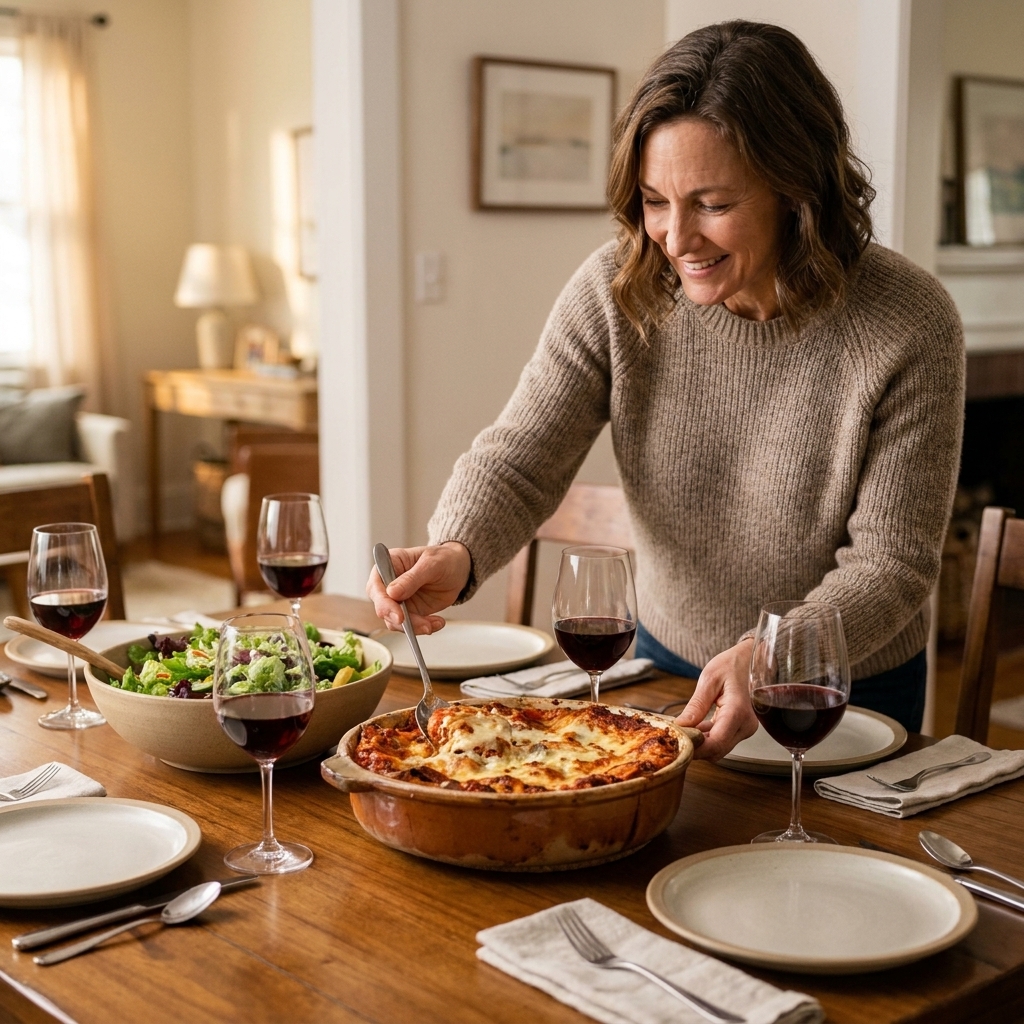
- Main: Baked ziti or lasagna (classic or spinach and mushroom) with a crisp green salad.
- Side: Garlicky broccolini, roasted earlier and rewarmed.
- Dessert: Tiramisu (assembled the day before) or affogato bar.
Make-ahead magic: Lasagna and baked ziti are the patron saints of stress-free hosting. Assemble the day before, then bake day-of. Tiramisu improves as it rests.
Shopping and prep lists
Master shopping categories
- Proteins: main dish protein plus one appetizer protein (optional)
- Produce: salad greens, herbs, citrus, one pretty produce item for garnish (berries, pomegranate, grapes)
- Dairy: butter, cream, cheese for finishing (Parmesan, burrata, mascarpone)
- Pantry: olive oil, vinegar, salt, pepper, sugar, flour, broth, canned tomatoes (if Italian menu)
- Bread: one baguette per 4 to 6 guests is usually safe
- Beverages: a common rule is about one bottle of wine per 2 guests, but it depends on drinking habits, the length of the night, and whether you are serving cocktails. Always round up on sparkling water and a festive nonalcoholic option.
- Hosting basics: extra ice, tea lights or taper candles, a simple bouquet
Prep list by moment
- Before guests arrive: set drink station, stage serving utensils, fill ice bucket, pour water into carafes
- During the surprise: nothing in the oven that needs babysitting
- After the reveal: serve something you can carry out in one trip
- During dinner: keep the kitchen sink empty and the dishwasher ready so mess stays contained
Dietary stress reducers
- Choose one inclusive anchor: a big salad, a beautiful roasted vegetable platter, or a naturally gluten-free side that everyone can enjoy.
- Have one solid nonalcoholic “signature”: something bubbly with citrus and herbs feels celebratory without explanation.
- Keep swaps simple: offer gluten-free bread or crackers with the starter, or make dessert naturally gluten-free (pot de creme, flourless chocolate cake, pavlova) so you are not baking two separate finales.
Set the scene
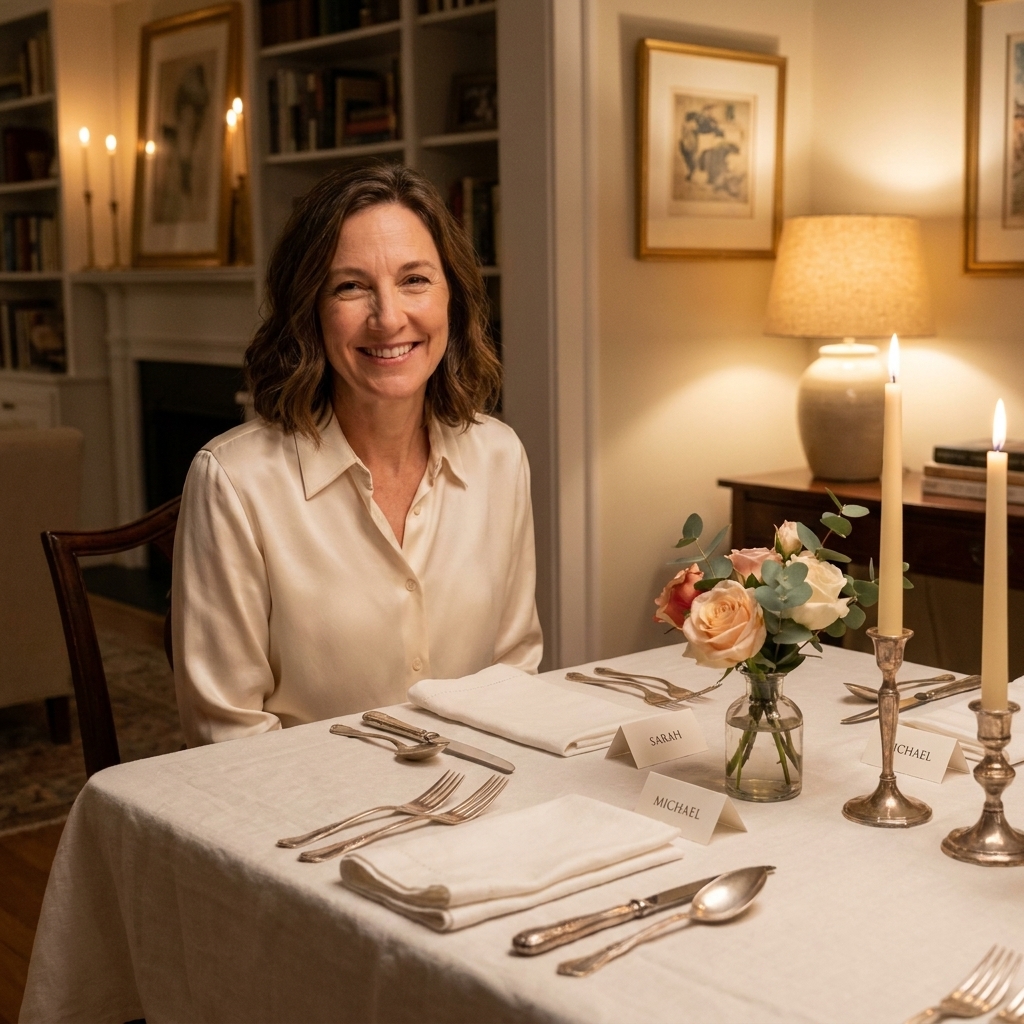
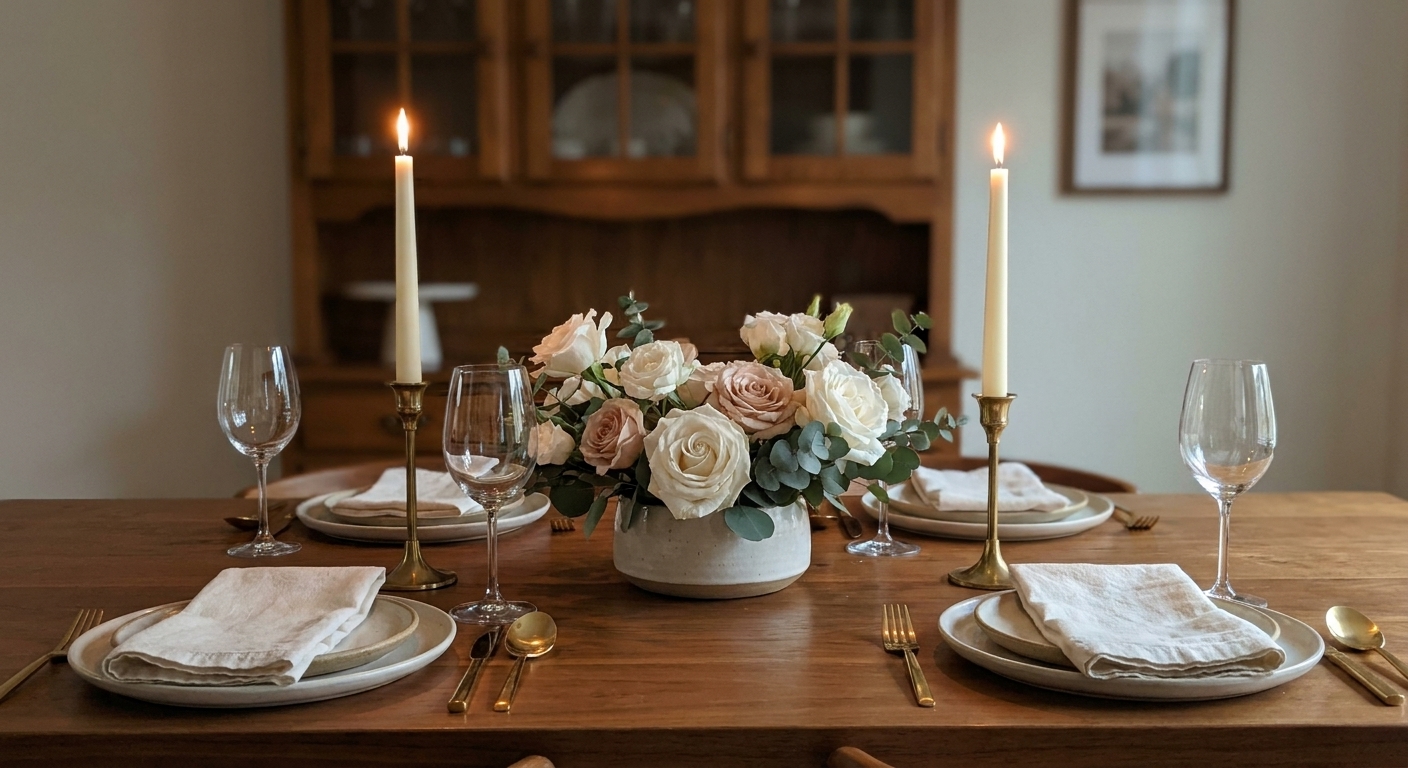
Anniversary dinners want warmth, not clutter. Choose a tight palette and repeat it three times: on the table, in the flowers, and in one small detail (like napkins or candles).
My low-effort formula
- Linens: a tablecloth or runner instantly upgrades the room.
- Candles: taper candles for height plus tea lights for glow.
- Flowers: one grocery bouquet, trimmed short in a low vessel so guests can see each other.
- Place cards: optional, but wonderful for easing family dynamics.
Elegant on a budget: Put your money into one or two things guests feel. Think candles, a favorite dessert, or a great bottle of olive oil for finishing. Borrow vases, skip fussy decor, and let the table do the talking.
The reveal
Option 1: Front door
Guests hide in the living room, you bring the honoree through the front door, lights are warm, music is on low. Your co-conspirator cues everyone to step forward together.
Option 2: Dining room
This is my favorite for shy honorees. It feels gentler. The honoree enters a beautifully set room and then notices familiar faces.
Option 3: Toast reveal
If you need a slower moment, start with a casual drink for two in the kitchen, then invite them into the living room where guests are already seated. A close friend offers the first toast to focus the energy.
Pro tip: Decide who takes photos. If everyone lunges for their phone, the moment gets chaotic. Assign one person to capture 30 seconds, then ask everyone to be present.
Etiquette and dynamics
Anniversaries can stir up feelings, especially in blended families or when a couple has weathered a hard year. The goal is to honor the couple without inviting speeches that go off-road.
- Toasts: cap them at 2 to 3 people and ask them ahead of time. Short and specific beats long and vague.
- Seating: use place cards if you anticipate tension. It is not controlling, it is caring.
- Gift guidance: if gifts are expected, suggest one lane: a card, a bottle, or a donation. Surprises are already a lot, and guests appreciate clarity.
- Alcohol: always offer a special nonalcoholic drink that is not just soda. It makes everyone feel included.
Day-of sanity savers
- Clean-as-you-go only: do not try to deep clean while cooking. Just keep surfaces clear and the sink empty.
- Serve family-style: fewer plated steps, more warmth, less time away from guests.
- Choose one wow item: it can be candles, dessert, or a beautiful main. You do not need six wow moments.
- Write a tiny run-of-show card: a note on your counter with the order of courses and oven temps prevents brain fog.
FAQ
How many people is ideal at home?
For many homes, 6 to 12 guests hits the sweet spot. Scale based on your space, how long people tend to linger, and whether you have help in the kitchen.
What is the easiest main?
Anything that improves when made ahead: braised short ribs, lasagna, baked ziti, or a hearty vegetarian stew. You want a main that can rewarm gently while you greet guests.
How early should guests arrive?
Aim for guests to be inside 30 to 45 minutes before the honoree arrives. Build in time for stragglers and for everyone to settle quietly.
How do I keep the kitchen from taking over?
Make the menu mostly make-ahead, set up a drink station guests can manage themselves, and serve in fewer courses. If you have a helper, assign them to keep water filled and plates cleared so you can stay at the table.
What if the honoree suspects something?
Do not over-correct. Keep your tone normal, stick to the simple decoy, and let your co-conspirator handle any last-minute adjustments. Suspicion does not ruin the surprise. A stressed host does.
A closing note
When the door opens and your person realizes they are surrounded by people who chose to show up for their love story, the room changes. That is the real gift. Plan carefully, yes. Then let the night be a little imperfect and wonderfully alive.