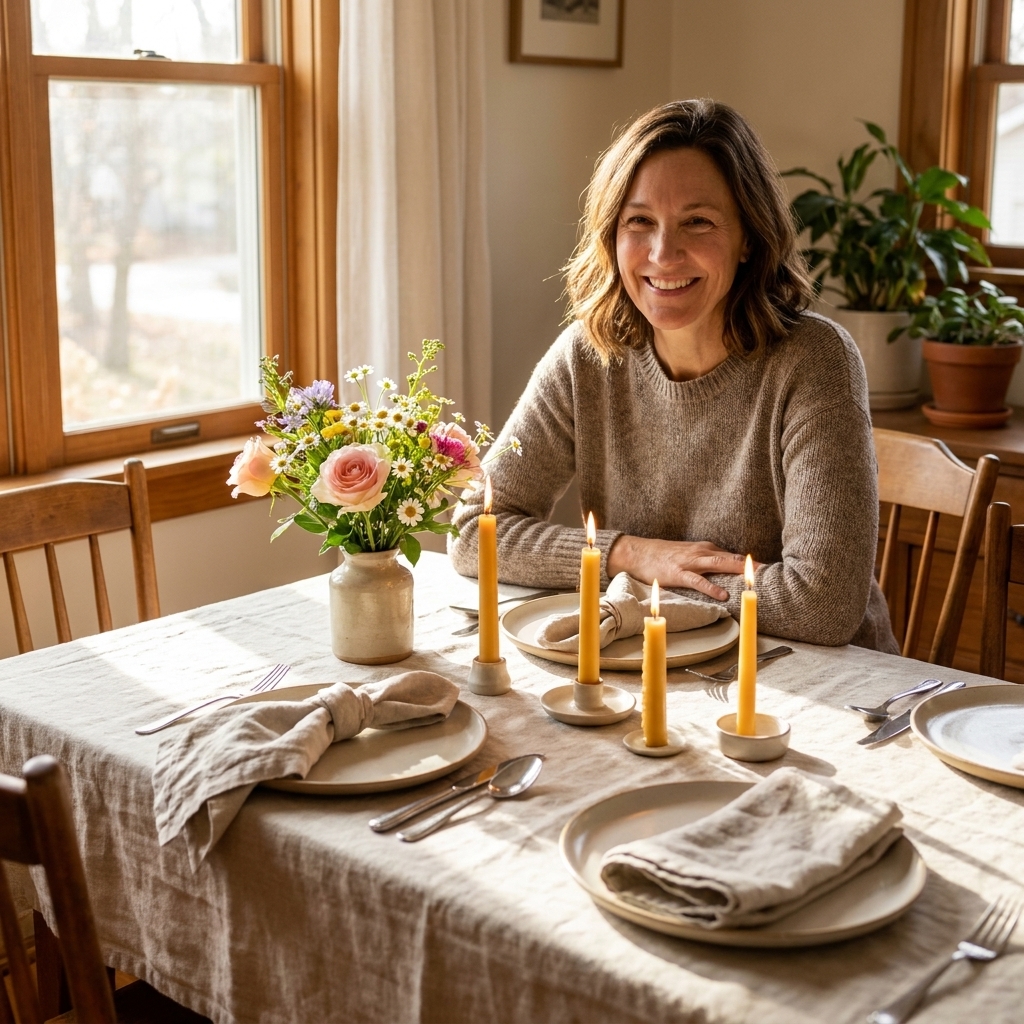
There is a moment in every big birthday plan when you realize the food is not just a line item. It is the pacing of the party, the comfort of your guests, and honestly, your ability to enjoy the person you are celebrating.
For 50+ guests, the choice between catering and DIY comes down to three things: your budget, your tolerance for logistical juggling, and how present you want to be during the celebration. I am firmly in the “connection over perfection” camp, so my goal is to help you pick the option that protects your energy and still feels special.
The quick answer
- Choose catering if your top priority is enjoying the party, your guest list is truly 50+ (especially with mixed ages), your venue has limited kitchen space, or you want a polished service flow.
- Choose DIY if you have a large, reliable helper crew, plenty of fridge space, you love cooking for a crowd, and you are comfortable doing a detailed prep schedule.
- Choose hybrid if you want a meaningful, homey feel without spending the whole event refilling trays. Hybrid is my most common recommendation for milestone birthdays.
Cost comparison
Before we talk numbers, a gentle reminder: people often compare “caterer quote” to “grocery receipt,” which is not apples to apples. For a 50+ guest event, DIY costs include not just food but also serving supplies, extra equipment, ice, storage, and the value of your time. Catering pricing can include labor, delivery, setup, and cleanup, but what is included varies a lot by vendor and service style.
Typical catering ranges for 50 to 75 guests
These are ballpark ranges in many U.S. markets. Region, season, vendor tier, and 2024 to 2026 inflation can shift pricing quickly. Minimum spends, service charges, and staffing minimum hours can also raise your effective per-person cost.
- Drop-off catering (no staff): roughly $18 to $35 per person for hearty buffet-style food, plus tax, delivery fee, and sometimes disposable serving ware. It typically does not include setup, rentals, or cleanup.
- Buffet with staff (setup and service): roughly $30 to $60 per person, depending on menu, staffing hours, and whether rentals are included. Cleanup is often limited to the caterer’s area, not your whole venue.
- Plated dinner: roughly $60 to $125+ per person, with higher staffing needs and more rentals. Ask what is included, because “plated” can still mean you are renting essentials separately.
Hidden line items to ask about: service charge, gratuity policy, staffing minimum hours, travel fee, rentals (tables, linens, plates, glassware), beverage service, cake cutting, breakdown responsibilities, and leftover packaging.
Typical DIY ranges for 50 to 75 guests
If you are cooking most of the food yourself, a realistic DIY range for a well-fed crowd is often $8 to $20 per person for groceries, depending on protein choices and how many sides and desserts you’re providing.
Then add the items that sneak up on you:
- Serving gear: chafing dishes or roasters, sterno, serving utensils, sheet pans, disposable pans.
- Disposables: plates, napkins, cutlery, cups, trash bags, paper towels, foil, parchment.
- Cold storage: extra fridge space or coolers, ice (more than you think), food thermometers.
- Venue needs: tables for buffet, extra power strips, extension cords (outdoor parties always need these).
The biggest “cost” in DIY is time. If you picture yourself greeting guests while also trying to keep food at safe temperatures and replenish trays, that time has a real value even if it does not show up on a receipt.
Stress comparison
When I planned intimate weddings, we used to say: you can either host or you can manage. For a milestone birthday, I want you hosting.
Catering stress level
- Lower day-of stress, especially if staff is included.
- Higher upfront decision-making: menu selections, dietary needs, rental coordination, timeline.
- Most predictable outcome if you choose an experienced caterer with clear service details.
DIY stress level
- Higher day-of stress: timing, reheating, replenishing, cleanup.
- Higher week-of stress: shopping, prep, storage, labeling, coordinating helpers.
- Can be joyful if cooking is your love language and you have a calm, capable kitchen crew.
If you are celebrating a 50th, 60th, 70th, or 80th, ask yourself one gentle question: Do I want to remember this as “the party where I finally sat down at 8:45”?
Logistics that matter
For 50+ guests, logistics matter as much as menu. Here are the practical pressure points I look at first.
Kitchen and storage
- DIY needs: fridge space for platters, space to stage trays, time slots for oven use, a plan for what is served cold vs. hot.
- Catering helps: food arrives packaged for service, with clearer volume control and less last-minute refrigerator juggling.
Food safety basics
This is the unglamorous part of hosting, but it matters. For large crowds, the “danger zone” is 40°F to 140°F (4°C to 60°C). A common rule of thumb is: do not leave perishable food out for more than 2 hours, or 1 hour if it is very hot outside. When in doubt, follow your local health authority guidance.
- DIY rule of thumb: serve mostly room-temp and cold items, and aim for 2 to 3 hot anchors max if you do not have dedicated warming equipment and a helper running it.
- Catering advantage: pros are built for holding temperatures and safe service flow, especially with staff.
Service flow
The smoother the line, the happier the room. With 50+ guests, avoid anything that requires lots of individual assembly unless you have staff or stations.
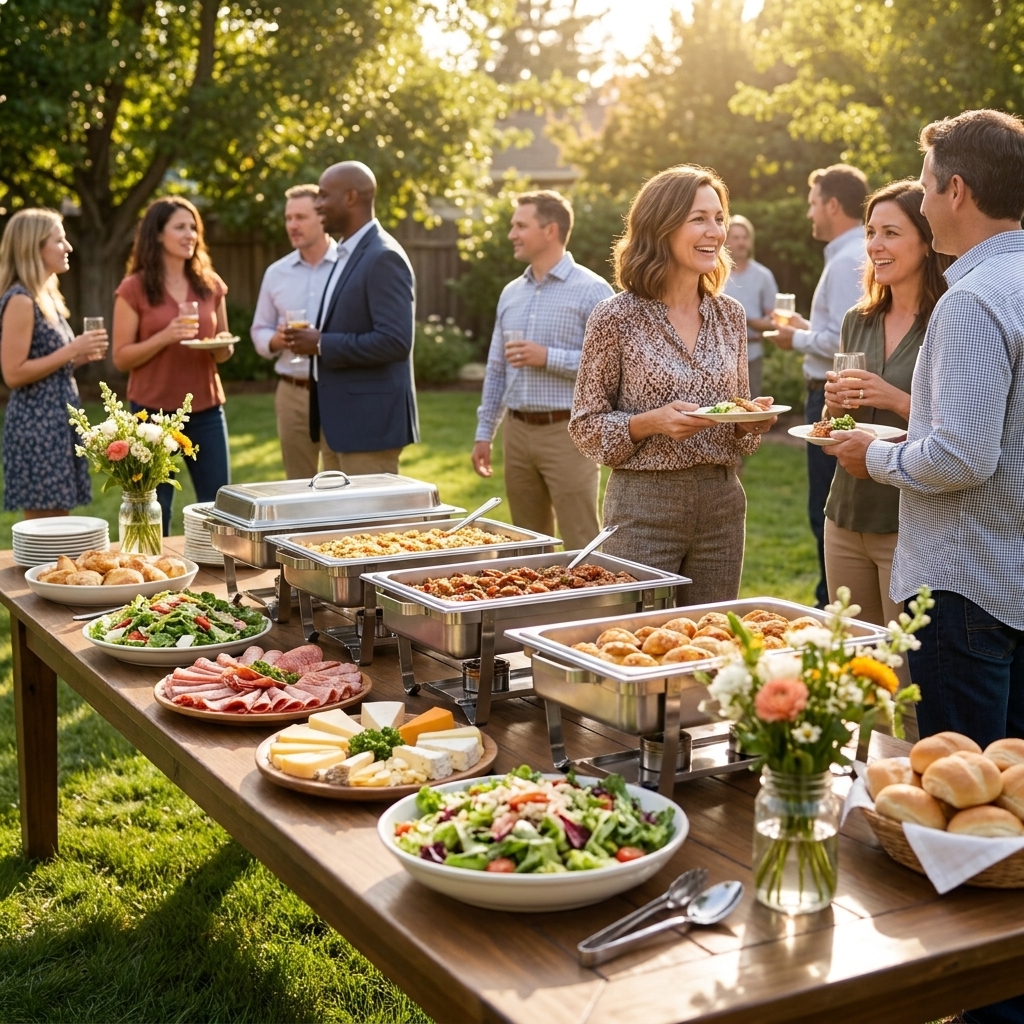
- Works well for DIY: big salads, baked pasta, taco bar with pre-portioned proteins, sandwich platters, mezze boards, sheet-pan appetizers, chili and cornbread, barbecue with purchased sides.
- Works well catered: carving stations, plated courses, passed hors d’oeuvres, and anything that needs precise timing.
When catering wins
In my experience, catering is worth it when it protects the host and keeps the celebration centered on the guest of honor.
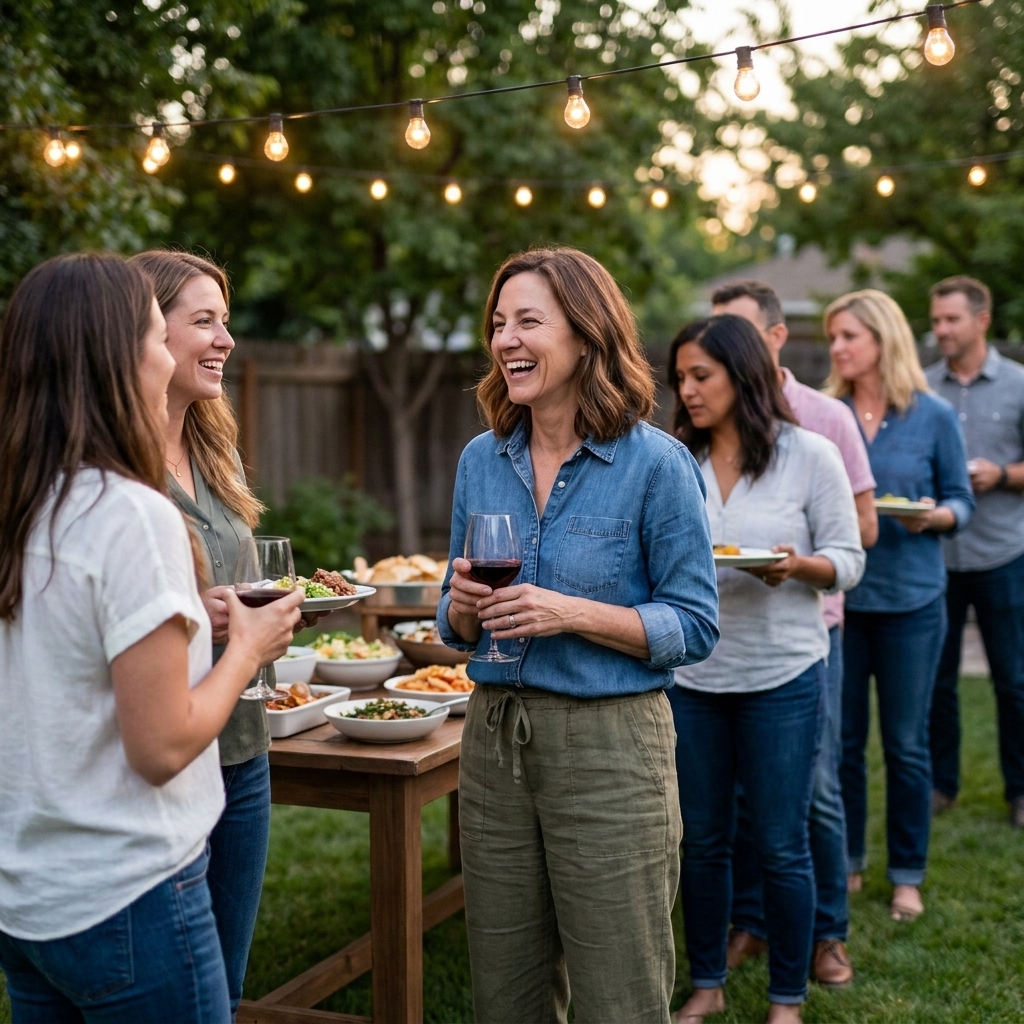
- You want to be present. If you are the person giving the toast, greeting out-of-town family, or wrangling multiple generations, outsourcing the food is a gift to yourself.
- Your guest list has mixed needs. Kids, older relatives, and dietary restrictions are easier with a pro who can label and manage specialty meals.
- Your venue has constraints. Limited oven space, no staging area, strict cleanup rules, or a tight rental window.
- You are hosting in a tricky season. Summer outdoor parties and December gatherings both come with extra complications.
How to save money if you cater
- Choose drop-off catering and assign two “food stewards” to keep trays refreshed and tidy.
- Do a hearty lunch instead of dinner.
- Skip passed appetizers and do one beautiful grazing table plus a buffet.
- Offer beer, wine, and one signature cocktail rather than a full bar.
- Order dessert catered, but add one sentimental homemade item like a family recipe cookie tray.
When DIY wins
DIY food can be absolutely charming for a milestone birthday, especially when the celebration is rooted in family traditions.
- You have a kitchen team. Not “a few people who said they can help,” but a committed crew with assigned tasks and arrival times.
- Your menu is designed for scale. Recipes that hold well, reheat evenly, and do not require last-minute finesse.
- You have the space. Extra fridge space, coolers, and serving surfaces.
- Your budget is the main constraint, and you are willing to trade time for savings.
DIY menu formulas for 50+
- The Comfort Buffet: baked ziti, big green salad, roasted vegetables, garlic bread, sheet cake.
- The Backyard Barbecue: pulled pork or chicken from a local smokehouse, DIY slaws and salads, cornbread, fruit platter.
- The Elevated Sandwich Party: assorted sandwich platters, two composed salads, chips and dips, cookies and brownies.
- The Taco Bar: two proteins, one vegetarian filling, rice and beans, salsa trio, pre-shredded toppings, churros or tres leches.
Notice what these menus have in common: big-batch, low-fuss, and forgiving.
DIY allergies and labeling
If you are handling dietary needs yourself, keep it simple and clear:
- Label everything with common allergens (nuts, dairy, egg, wheat, soy) and note vegetarian, vegan, and gluten-free items.
- Use separate serving utensils for each dish, especially for gluten-free and nut-free options.
- Protect a few “safe” plates by keeping them covered and behind the table until the guest who needs them arrives.
The hybrid approach
If you are torn, hybrid is often the sweet spot: you outsource the heavy lifting and keep one or two personal touches that feel like love on a plate.
Three easy hybrid plans
- Cater the mains, DIY the sides: order proteins and one hot side, make salads, bread, and a signature dip.
- Drop-off catering plus a homemade dessert table: let the food arrive ready, then add family-recipe brownies, cookies, or a nostalgic treat that tells a story.
- Restaurant trays plus a styled setup: pick up pans of food from a favorite local spot, then elevate with platters, labels, and a thoughtful buffet layout.

Staffing and equipment
Simple staffing rule
For drop-off catering or DIY, a good rule of thumb is 1 helper per 15 to 20 guests during peak food time. They do not need to cook. They just keep the buffet tidy, refill, manage trash, and keep drinks and ice stocked. If that sounds like too many people, go hybrid or add paid event help.
DIY must-haves
- Warming: 2 to 4 roasters, slow cookers, or chafers (depending on menu), plus fuel if needed.
- Temp tools: at least one quick-read thermometer.
- Buffet basics: serving utensils for every dish, labels, extra tongs.
- Power plan: extension cords and power strips (rated for outdoor use if applicable).
- Hand hygiene: hand sanitizer at the buffet, and if outdoors, a simple handwashing setup if you can manage it.
- Trash and recycling: clearly marked bins and plenty of liners.
Beverages for 50+
Beverages are the other “sneaky” category. Whether you cater or DIY, plan like a thoughtful host: water, ice, and non-alcoholic options matter just as much as the fun stuff.
- Water: plan at least one drink per person per hour available as water or sparkling water, more if it is hot or outdoors.
- Non-alcoholic options: offer at least two choices (for example, iced tea and lemonade) plus something diet or zero-sugar if that fits your crowd.
- Ice: for 50+ guests, you will almost always need multiple large bags. A practical move is to buy extra and store it in coolers so you are not sending someone out mid-party.
Decision checklist
If you answer “yes” to two or more in either column, you have your direction.
Lean toward catering if:
- You want to socialize more than you want to manage food.
- You will be the primary host with limited help.
- Your venue has a small kitchen or strict rules.
- You have many dietary needs to accommodate.
- You are planning a more formal tone, like a seated dinner.
Lean toward DIY if:
- You genuinely enjoy cooking for crowds.
- You have at least 3 to 5 reliable helpers.
- You can prep 70 to 80 percent of food ahead.
- You have adequate fridge space and serving equipment.
- You are comfortable with a simpler menu and presentation.
Timelines
If you cater
- 6 to 10 weeks out: get quotes, confirm headcount range, book.
- 2 to 3 weeks out: finalize menu, rentals, and timeline.
- 1 week out: confirm delivery window, serving items, dietary labels.
- Day of: designate one point person who is not you to meet the delivery or staff.
If you DIY
- 4 to 6 weeks out: lock the menu and serving plan, assign helper roles.
- 2 weeks out: test one recipe at scale if it is new, inventory your equipment.
- 1 week out: shop nonperishables, confirm fridge and cooler plan.
- 2 days out: prep cold items, make sauces, bake desserts.
- 1 day out: cook hot items that reheat well, set up beverage station, label platters.
- Day of: reheat in waves, put out small batches, refresh often.
Questions for a caterer
- What exactly is included in the per-person price?
- Is there a service charge, and is gratuity included?
- Do you provide serving utensils, chafers, and fuel?
- Who handles setup and cleanup, and what does that cover?
- Do you provide rentals (or coordinate them), and what is excluded?
- How do you label allergens and dietary options?
- What is your plan for leftovers?
- What happens if guest count changes by 10 percent?
My honest recommendation
For a 50+ guest milestone birthday, catering is usually the best choice if your budget can stretch even a little, because it buys back the one thing you cannot replenish on party day: your attention.
But if DIY is meaningful to you, do it with boundaries. Choose a menu that scales, prep early, and recruit real help. The goal is not to prove you can do it all. The goal is to celebrate someone you love, and to still have the energy to sit beside them, laugh, and stay a while.
FAQ
How much food do I need for 50 guests?
For a buffet-style meal, plan for one generous main plus 2 to 3 sides, and consider guests’ appetites and event timing. If it is an afternoon party with grazing, you can scale down the “dinner portions” and focus on steady replenishment.
Is drop-off catering enough for a big birthday?
Yes, if you assign two helpers to manage the buffet: one to refresh food and one to keep the area tidy and stocked. Drop-off is often the best value for casual milestone parties.
What is the easiest DIY food for a large crowd?
Baked pasta, taco bars, barbecue-style spreads, and sandwich platters are the least stressful because they hold well and do not require precise last-minute cooking.
How do I keep DIY food warm without a caterer?
Use roasters, slow cookers, and chafing dishes, and serve in smaller batches so food is refreshed often. Keep backup trays hot in the oven or roasters, and rotate them onto the buffet.