
Some celebrations are loud by nature. Others are quiet, brave, and deeply personal. A name reveal or gender transition celebration sits in that second category for many families, friends, and partners. The goal is not spectacle. The goal is witness. To say, clearly and lovingly: I see you, I believe you, and I am glad you are here.
This guide is for hosts who want to honor a loved one’s transition or name change with care. I will walk you through consent and privacy, guest list decisions, invitation wording, pronoun support, family dynamics, and easy, joyful ways to mark the moment without putting anyone on the spot.

Start with consent
Before you book a table or design a cake topper, start with a conversation. Your loved one gets to lead this celebration. Your job is to build a container that feels safe, affirming, and true to them.
Ask these questions first
- What are we celebrating, specifically? A new name? A new pronoun set? A legal name change? A “first time introducing myself as…” moment? A transition milestone like starting hormones, top surgery recovery, or simply a fresh start?
- How public can this be? Are they out to everyone you would invite? Are there people who can know the new name but not the transition details, or vice versa?
- What does support look like today? Some people want to give a toast. Others want zero speeches and a normal dinner where no one stares at them.
- What words feel good? “Name reveal” can feel playful, but not everyone loves the “reveal” framing. Options include name celebration, new chapter party, chosen name dinner, affirmation gathering, or simply celebrating [Name].
- Do you want photos? Decide whether photos are encouraged, limited, or not allowed. Privacy is a gift.
My best planning rule: if the celebration risks making them manage other people’s feelings, scale it down. Connection is always more important than perfection.
Pick the right format
Affirming celebrations can be anything from a low-key brunch to a full evening party. When you are deciding, consider energy levels, dysphoria triggers (like certain clothing expectations), and who may need extra guidance around language.
Gentle, low-pressure options
- Cozy dinner at home: A favorite meal, a simple cake, and a few people who already “get it.”
- Brunch or afternoon tea: Light, warm, and easy to leave early.
- Park picnic: Casual, budget-friendly, and naturally spaced out.
- Restaurant gathering: Less cleanup and fewer hosting tasks. Choose a spot that is LGBTQ+ friendly and uses the correct name for reservations if desired.
- Virtual toast: Perfect for long-distance friends or for someone who wants support without a crowd.
If you want it bigger
Go bigger only if your loved one is truly excited by it. Consider a “come and go” open house, which keeps intensity lower than a sit-down event. Provide clear expectations in advance so guests know what matters most: respect.
Guest list and privacy
This is the part that can feel tender. A transition or name change may be celebrated by some and complicated for others. Your loved one should never have to perform resilience in front of people who have not earned access.
Build the guest list in circles
- Circle 1: People who use the correct name and pronouns now, without reminders.
- Circle 2: People who mean well but need guidance and are willing to learn.
- Circle 3: People who are not safe, not supportive, or unpredictable.
Most of the time, Circle 3 does not get an invite. If family dynamics make that complicated, choose a smaller event or separate gatherings so the celebrant is protected.
Set boundaries on sharing
Talk about what can be posted and what cannot. A simple approach is: no social media without explicit permission, no tagging, no “before and after” photos, and no details about medical care shared casually.
Invitation wording
The right invitation does two jobs: it celebrates, and it sets expectations. Keep it warm and straightforward. If the celebrant wants a low-key tone, follow their lead.
Invitation ideas (copy and paste)
- Simple and sweet: “Join us to celebrate [Name] and a beautiful new chapter. We will gather for dinner and good company on [date] at [location].”
- Name-centered: “We are celebrating [Name] and would love you there. Please use [Name] and [pronouns] as we toast this milestone together.”
- Low-pressure: “Come as you are for snacks, hugs, and a happy hello to [Name]. No speeches, just love.”
- Privacy-forward: “We are keeping this gathering private. Please do not post photos or details on social media.”
A host note for guests who need guidance
If the celebrant agrees, you can include a short, kind line that prevents awkwardness later:
- “Thank you for helping us create a respectful space. If you make a mistake, just correct yourself and move on.”
- “We are here to celebrate. Questions about medical details are not appropriate for this gathering.”
Pronouns and introductions
One of the most loving things you can do is reduce the burden on the celebrant. That means building small supports into the event so they do not have to constantly correct people.
Practical ways to set guests up for success
- Name and pronoun reminders: Add the correct name and pronouns on the invitation, and again in a quick welcome text the day before.
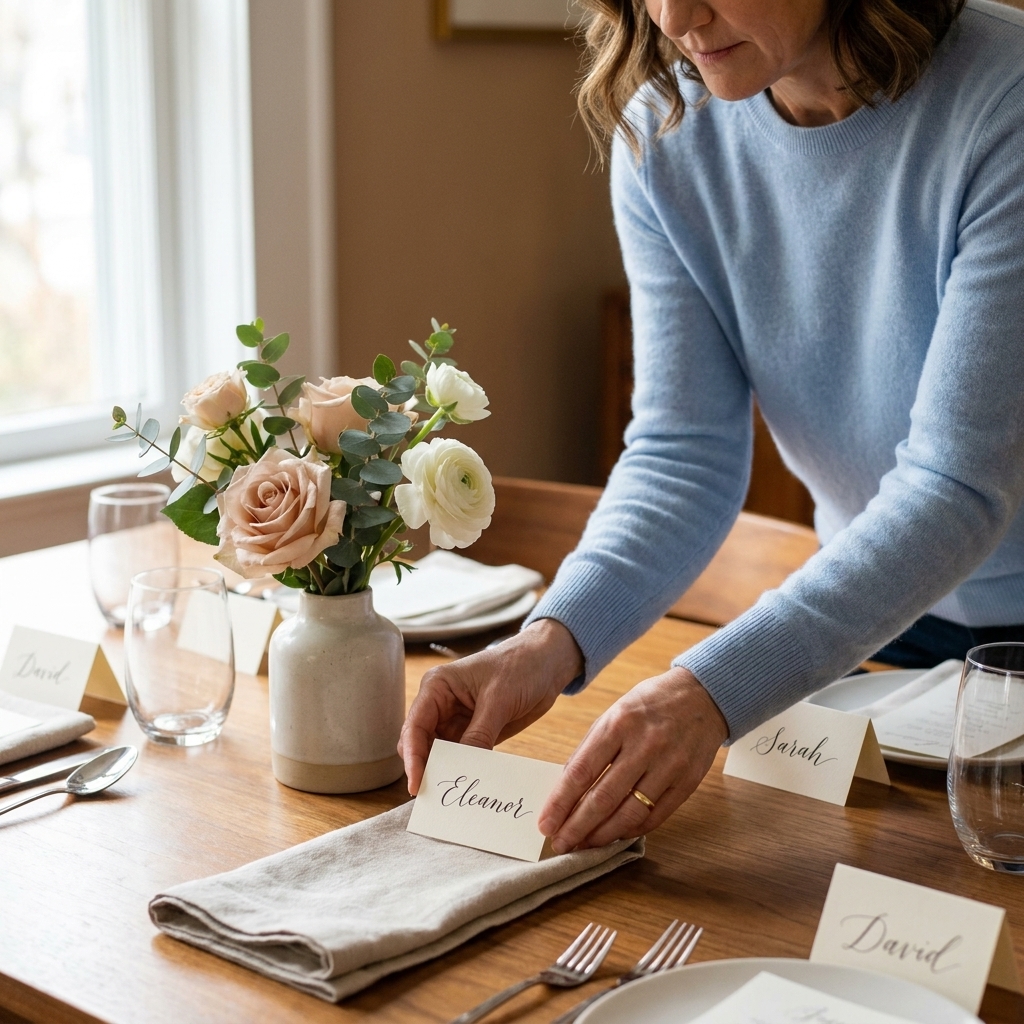
- Place cards: Place cards can include names. Only include pronouns if the celebrant wants that and if guests will not feel pressured to share.
- Host-led introductions: If you are doing introductions, model it: “Hi, I’m Elise, I use she and her.” Keep it optional for others.
- Gentle correction plan: Decide who will correct misgendering so it is not always the celebrant. A close friend can be a quiet “pronoun buddy.”
If someone slips up: quick apology, correct it, move on. Long apologies can make the moment about the person who made the mistake.
Decor and theme ideas
Transition celebrations do not need to rely on gender stereotypes. Many people find that pink-and-blue tropes feel constraining, especially for nonbinary and gender-expansive folks. Instead, pick a theme that honors personality, interests, or a shared memory.
Theme ideas that feel personal
- “New Chapter”: fresh florals, bookmarks as favors, a cozy reading nook.
- “Bloom”: botanical centerpieces, seed packet favors, garden-party snacks.
- “Golden Hour”: warm candlelight, honey tones, citrus, soft music.
- “At Last”: old photos of meaningful places (not old portraits of the celebrant unless they request it), a playlist of comfort songs.
- Favorite color party: Let the celebrant pick one color that makes them feel like themselves.
Decor details that read as affirming
- Welcome sign wording: “Welcome, we are so glad you are here.”
- Photo plan: Offer photos as an option, not an expectation. Make a flattering, comfortable spot near natural light.
- Bathroom comfort: If you have multiple bathrooms, consider labeling by “Bathroom” and “Bathroom” rather than gender. If you have one bathroom, add a little basket with mints, lotion, and hair ties.

Food and drink
Menu planning is one of my favorite ways to make someone feel seen. Choose foods that are comforting, celebratory, and easy to eat in conversation.
Easy menu formulas
- Brunch: quiche or frittata, fruit salad, pastries, coffee and tea, a make-your-own mimosa bar if appropriate.
- Dinner: a “favorite things” spread with the celebrant’s top three dishes, plus one vegetarian option and one gluten-free option if possible.
- Open house: grazing board, crudités, dips, bite-size desserts, sparkling water and a signature mocktail.
Cake wording
Keep dessert wording simple and celebratory. Options: “Welcome, [Name],” “So Loved,” “New Chapter,” or just the celebrant’s name. Skip anything that implies the old name was a costume, a mistake, or a surprise twist.
Toasts, gifts, activities
Not every event needs a program. If your loved one wants to keep things casual, you can still create a meaningful moment without putting them on a stage.
Low-pressure activity ideas
- Affirmation cards: Set out blank cards for guests to write a memory, a hope, or a message of support. Collect them in a keepsake box.
- Playlist building: Ask each guest to add one song that makes them think of joy or courage.
- Polaroid guestbook: Only if photos feel safe. Guests can snap a photo and write a note.
- “How we know each other” prompts: Table prompts keep conversation warm without centering transition details.
Gift etiquette
Gifts should never be expected. If guests ask, suggest things that support comfort and joy: a favorite book, a restaurant gift card, a cozy hoodie, skincare, or donations to a cause they care about. If the celebrant is updating documents or wardrobe, offer a gift card discreetly and without commentary on their body.

Family dynamics
Sometimes the biggest stressor is not logistics. It is relationships. If there are guests who may be awkward, resistant, or performative, you can plan for that without letting the whole event revolve around them.
Ways to protect the celebrant
- Assign a point person: One trusted friend or relative handles issues so the celebrant does not have to.
- Choose seating wisely: Place supportive people closest to the celebrant. Keep volatile personalities farther away.
- Set boundaries in advance: A private message can be kind and firm: “We are celebrating [Name]. Please use [Name] and [pronouns]. If you cannot do that, this is not the right event for you.”
- Have an exit plan: If things get heavy, it is okay to end early. Plan a post-event decompression like a quiet walk, a favorite dessert, or a movie at home.
If someone says the wrong thing
You cannot control every comment, but you can control your response. Keep corrections brief. Redirect to celebration. If someone persists, remove them from the conversation or the event. Safety and dignity come first.
Legal name change notes
Some celebrations are tied to a legal name change. That can be a huge relief, and it can also bring up privacy and safety concerns.
- Confirm what is public: In some places, name changes may involve public notices or court records. Your loved one may prefer not to connect legal details with an event.
- Mind the paper trail: For invitations, consider digital invites or private messaging if mailing feels risky or if households are mixed-support.
- Use the correct name where you can: Place cards, group chats, and RSVPs should reflect the chosen name, unless there is a safety reason not to.
Hosting checklist
Two to four weeks before
- Confirm the celebration type, guest list, privacy boundaries, and budget with the celebrant
- Pick a location and time that supports comfort and energy levels
- Send invitations with clear name and pronoun guidance if desired
- Plan food around favorites and dietary needs
One week before
- Send a simple reminder with address, start time, parking, and privacy note
- Decide whether there will be a toast and who will speak
- Prepare affirmation cards or a guestbook if you are using one
Day of
- Set up a calm welcome moment with the celebrant’s chosen name visible in a natural way
- Brief your “pronoun buddy” or point person
- Take a deep breath and remember: warmth matters more than a flawless schedule
FAQ
Is it okay to call it a “gender reveal”?
Usually, no. “Gender reveal” is commonly associated with announcing a baby’s assigned sex, and it can feel dismissive or loaded in the context of a transition. If your loved one uses that term for themselves, follow their lead. Otherwise, choose language like “name celebration,” “affirmation party,” or “celebrating [Name].”
Do guests need to bring gifts?
No. The best gift is respectful language and genuine support. If people ask, suggest small, comforting gifts or a card with a heartfelt note.
Should we do pronoun stickers or name tags?
They can be helpful, but they can also pressure people who are not ready to share. If you use them, make them optional and keep the focus on the celebrant, not on making every guest disclose.
What if the celebrant is not out to everyone?
Then the event should be limited to people who are safe, or structured so it does not force disclosure. You can host a “celebrating [Name]” dinner without explaining why to every attendee, as long as everyone invited can respect the basics.
What is the most important thing to get right?
Protecting dignity. Use the correct name and pronouns, keep boundaries around privacy, and surround your loved one with people who bring ease, not extra work.
A closing note
If you are planning this celebration, you are doing something quietly powerful. You are making room for someone to be fully themselves in front of people who matter. Keep it tender. Keep it real. And if a napkin is wrinkled or the cookies are slightly overbaked, let it be. The point is the love.