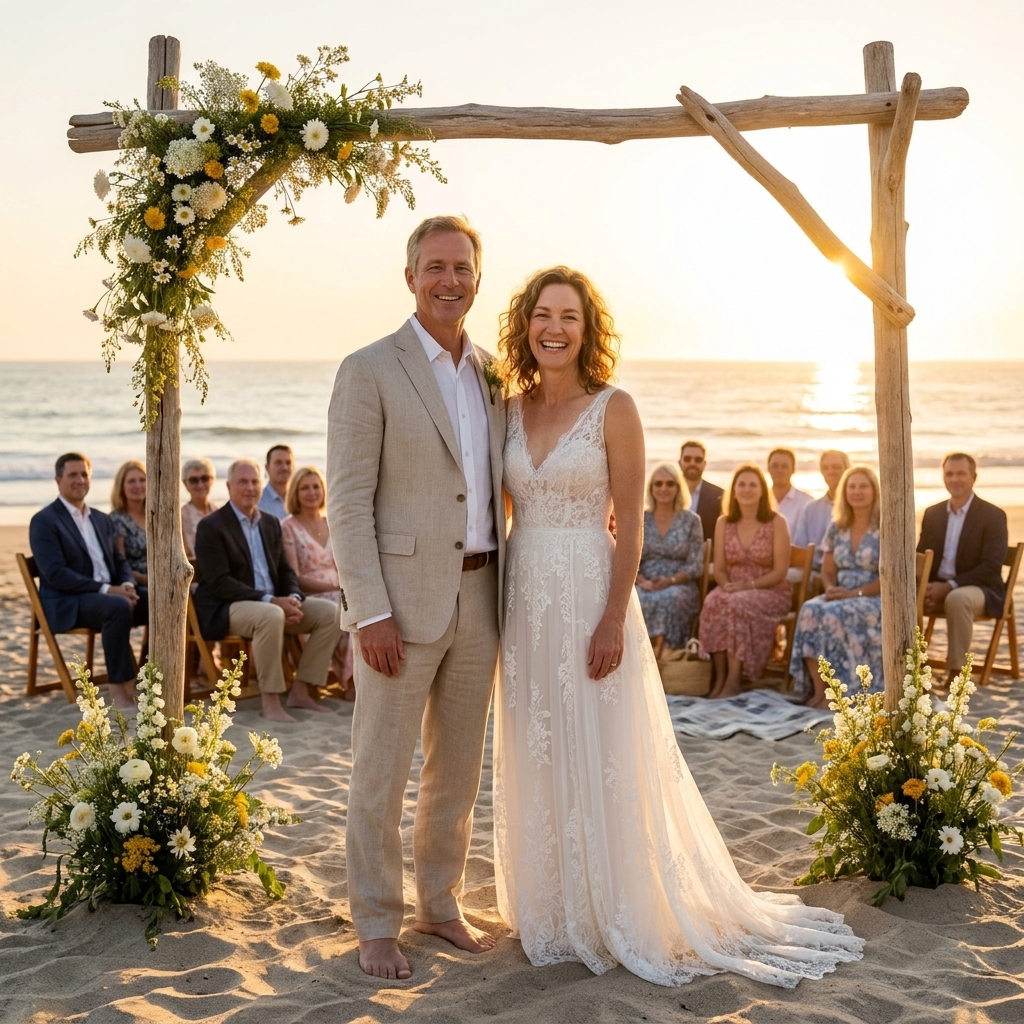
Eloping is not “doing less.” It is choosing exactly what matters most and giving it your full attention. When couples tell me they want an elopement that feels romantic, calm, and intentional, my first reminder is always the same: connection is more important than perfection.
The second reminder is less poetic but just as important: an elopement still has real legal requirements. The good news is that once you understand the handful of rules that actually matter, the rest becomes a joyful, manageable planning project.
What an elopement is (and is not)
Traditionally, “elopement” implied secrecy. Today, most couples use it to mean a small, intentional wedding day, often with just the two of you or a tiny guest list.
Common formats
- Just the two of you: officiant plus required witness(es), if needed.
- Micro-elopement: 2 to 20 guests, usually immediate family or a few friends.
- Destination elopement: travel-based, sometimes paired with a honeymoon.
- Legal now, celebrate later: paperwork at home, ceremony experience elsewhere, or a later reception.
There is no “right” version. There is only the version that supports your relationship and your season of life.
Start here: legal basics
Most legal hiccups come down to three things: license rules, officiant rules, and witness rules. These vary by state and sometimes by county. This guide is written with U.S. elopements in mind. If you are marrying outside the U.S., treat every step below as a starting point and confirm requirements with the local civil authority where you plan to marry.
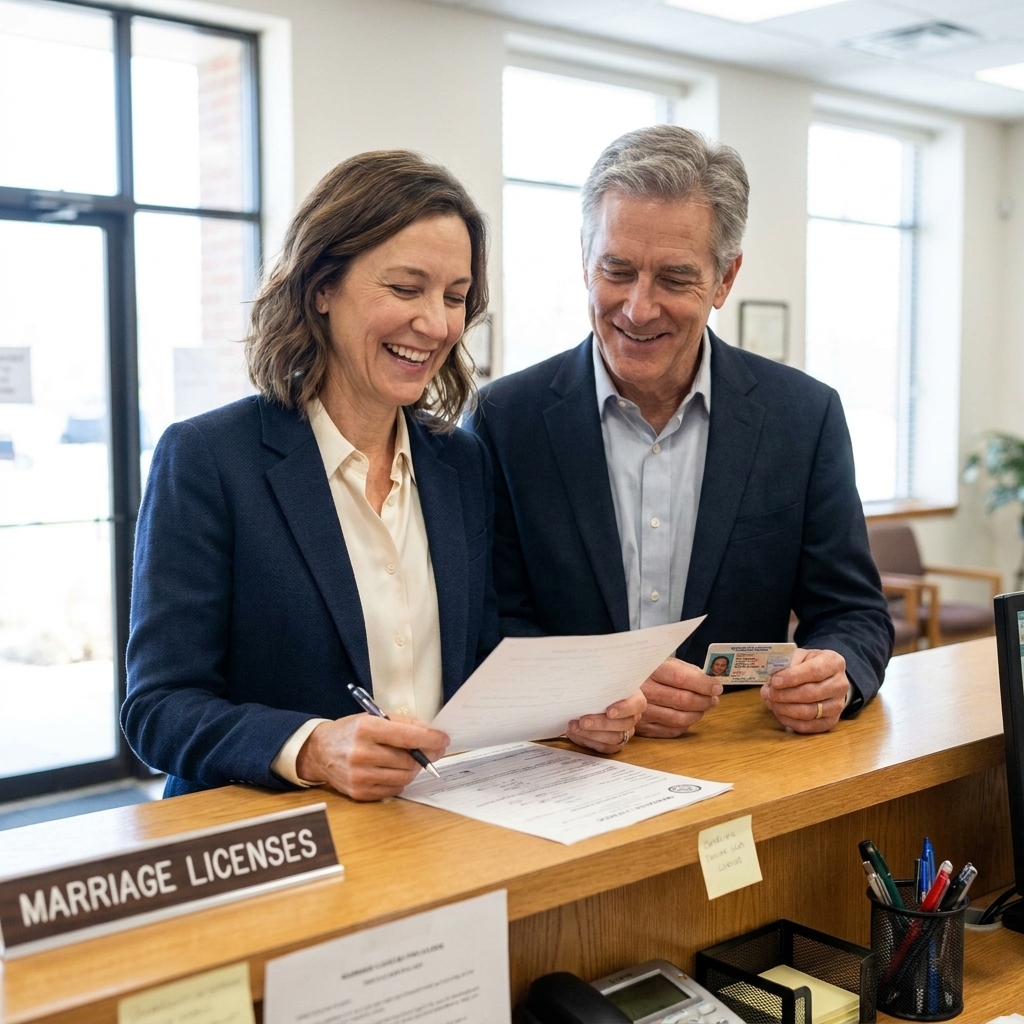
Marriage license: the essentials
- Where you apply: In many states, you apply through a county clerk or recorder’s office in the state where you will legally marry. Some states let you apply in any county statewide, while others may be more location-specific. Always confirm the rules for your state and county.
- Waiting period: Some places let you marry immediately, others require a waiting window.
- Expiration: Licenses often expire within 30 to 90 days, but this can vary significantly. Plan around the dates that apply to you.
- IDs and documents: Typically government-issued photo ID. Some jurisdictions ask for birth certificates, divorce decrees, or name change documentation.
- Fees: Expect a fee due at application, sometimes cash only.
Officiant: who can legally marry you?
Many states accept ordained officiants, but the details matter. Some counties require an officiant to register or be authorized before the ceremony. And while online ordination is accepted in many places, it is not universally recognized, and some jurisdictions have additional restrictions. If you are using a friend or family member as your officiant, verify (1) whether their ordination path is recognized and (2) whether the county requires any registration or proof before they can sign your license.
What “registration” can look like: in some counties it is as simple as an online form and a fee. In others, it may require an in-person visit, credentials, or processing time. It is worth confirming early.
Witnesses: how many do you need?
Some states require zero witnesses, some require one or two. If you are eloping alone in a gorgeous place at sunrise, do not assume you can “figure it out there.” Confirm witness requirements early so you are not recruiting a passing hiker in formalwear.
My planning rule: If you are eloping out of state, confirm the county’s license rules in writing by checking the official county clerk website and, if anything is unclear, calling during business hours. A ten-minute call can prevent a very expensive reschedule.
Out-of-state elopements
If you are traveling for your elopement, getting legally married in the state where the ceremony happens is often the simplest route. But it is not always the easiest (waiting periods, office hours, travel delays). If you want the experience of a destination day without any legal stress, another clean option is to do the legal paperwork at home and have a symbolic ceremony while you travel.
Step-by-step license workflow
- Pick your ceremony location first. State and county rules depend on where you will sign the license.
- Check the county clerk website. Look for: application process, appointments, required documents, waiting periods, expiration, and hours.
- Decide when to arrive. Build in time for license pickup plus any waiting period. For example, if there is a 24-hour waiting period, you may need to arrive two days before your ceremony.
- Book an appointment if required. Many offices moved to appointment-based systems.
- Confirm officiant and witness requirements. Make sure your vendors align with the county’s rules, including any officiant authorization or registration requirements.
- Make a “license kit.” IDs, required documents, payment method, appointment confirmation, and a pen. Yes, really.
- Plan the return process. Some officiants file the license, others hand it to you. Know who mails it, where it goes, and the deadline.
Choosing a location
Your location sets the tone, the logistics, and sometimes the legal constraints. When couples feel overwhelmed, it is usually because the location is doing too much heavy lifting. Choose a place that supports your day, not a place that creates constant obstacles.
Location options
- Courthouse or city hall: The simplest legal path. Add romance with a beautiful outfit, bouquet, and a celebratory meal afterward.
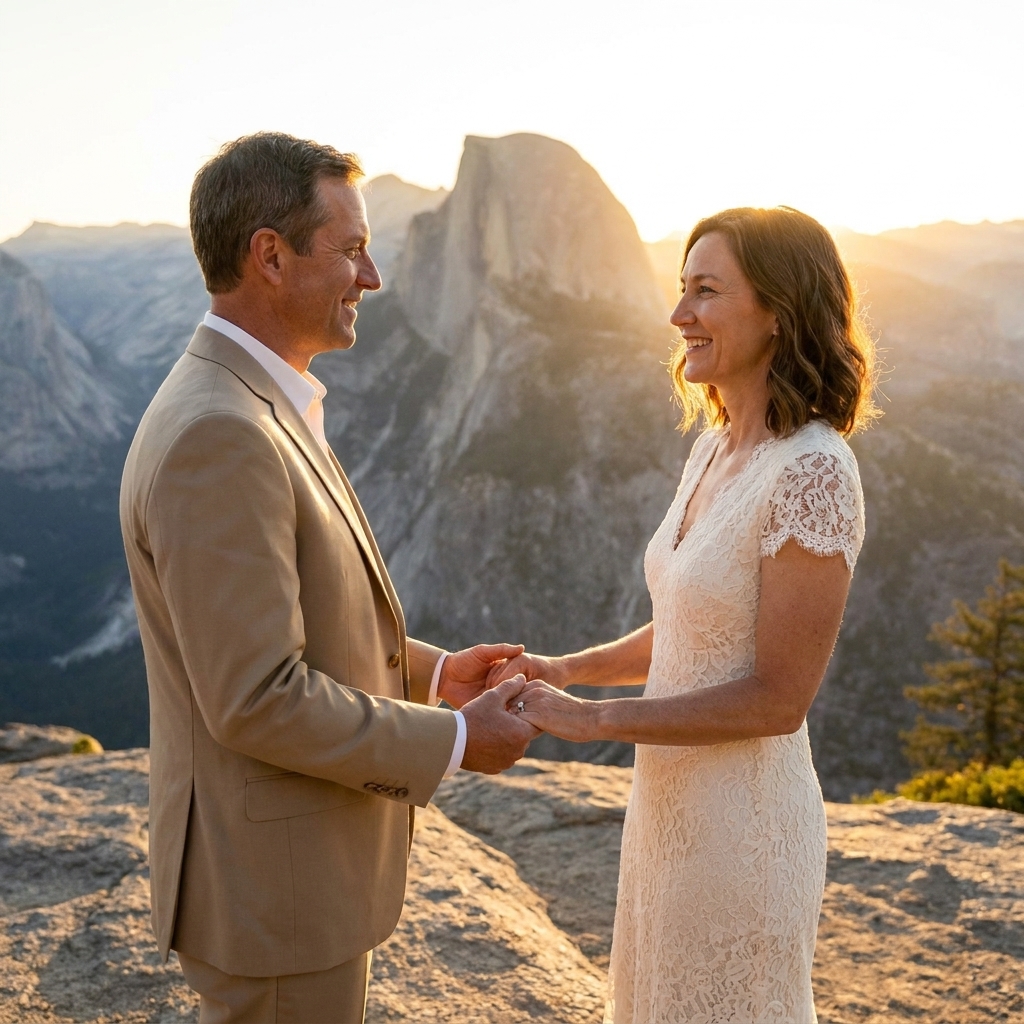
- Public land (national park, state park, beach): Often breathtaking, but permits, timing restrictions, and guest limits are common.
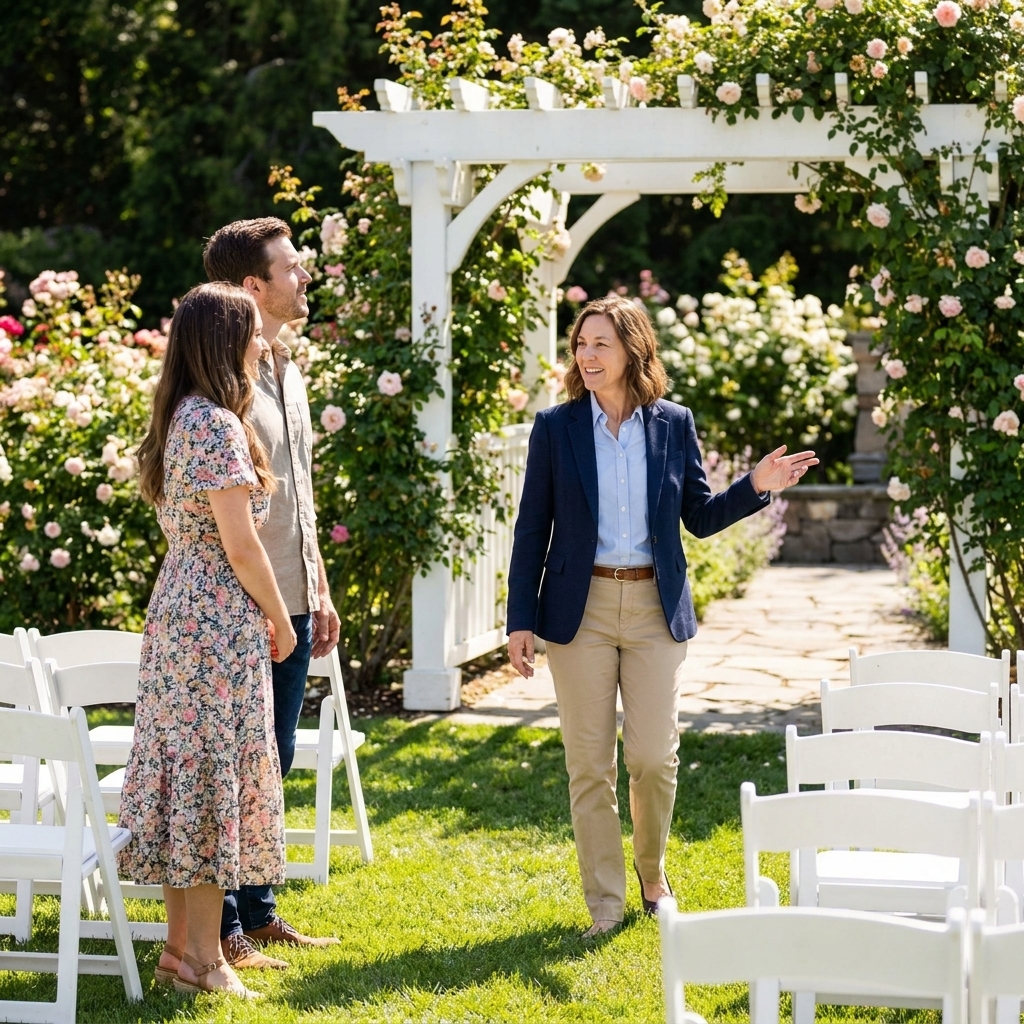
- Private venue (inn, restaurant, garden): More control, often easier for accessibility and weather backup.
- Vacation rental: Cozy and personal, but verify event rules and local regulations.
Permits and rules to ask early
- Do we need a special use permit for a ceremony or photography?
- Are there group size limits?
- Is there a time-of-day restriction?
- Are arches, chairs, florals, or amplified music allowed?
- Are there protected areas where you cannot step or place decor?
National park note: Many national parks require a ceremony permit even for small groups and may restrict ceremonies to specific locations. Always check the park’s wedding permit page and the current rules for ceremony areas before you book travel.
A realistic permit example: If a park requires a special use permit and has limited ceremony slots, you may need to apply 4 to 12+ weeks ahead (sometimes longer in peak season). If you are set on a specific date, check permit lead times before you commit to vendors.
Vendors you actually need
One of the sweetest parts of eloping is keeping your vendor team small and excellent. You are not trying to staff a 150-person event. You are building a calm, trustworthy circle.
The core team
- Officiant: Legal requirements, ceremony writing, guidance on license signing.
- Photographer: Your witness to the day and the person who helps you slow down and remember it.
- Hair and makeup: Optional, but it can make the day feel special and reduce stress.
- Florals: A bouquet and boutonniere can transform simple into cinematic.
Optional additions
- Planner or elopement coordinator: Especially helpful for permits, timelines, and local logistics.
- Videographer: Perfect if family cannot attend and you want a keepsake beyond photos.
- Live musician: A simple acoustic moment can feel deeply intimate.
- Private chef or restaurant buyout: A romantic “reception” without the production.
Questions to ask before you book
- Have you worked in this location or county before?
- What is your backup plan for weather and travel delays?
- Do you help with permits or location rules?
- What is included, and what costs extra (travel fees, additional hours, editing)?
- What is your cancellation or reschedule policy?
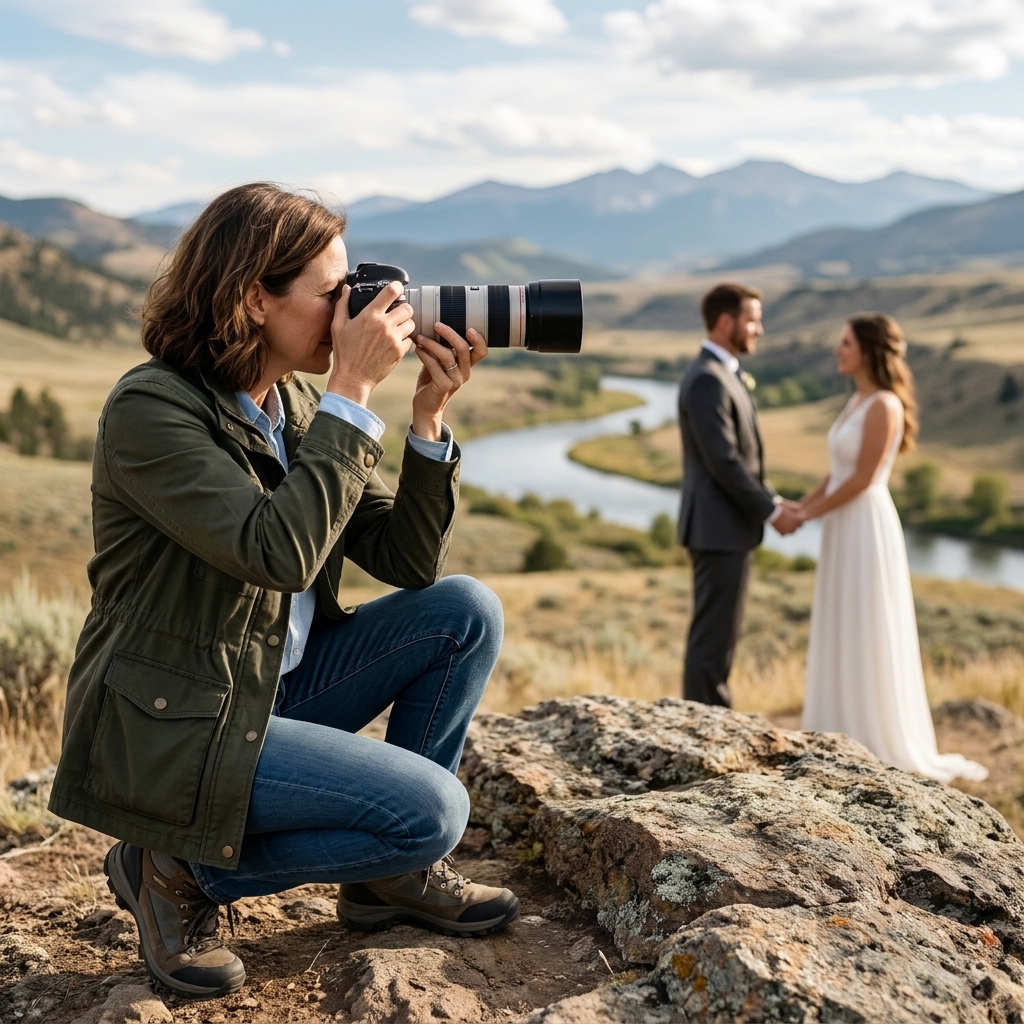
A simple timeline
An elopement timeline should feel like a love letter, not a production schedule. You want structure, but you also want quiet pockets of time where nothing is expected of you.
Sample: sunrise or morning
- 5:00 AM: Hair and makeup begins (if using).
- 6:30 AM: Get dressed, private letters or vows review.
- 7:15 AM: First look (optional) and a short photo walk.
- 8:00 AM: Ceremony and license signing.
- 8:30 AM: Post-ceremony portraits.
- 9:30 AM: Breakfast or coffee celebration.
- 11:00 AM: Rest, nap, explore, or begin honeymoon plans.
Sample: sunset
- 2:00 PM: Hair and makeup begins.
- 4:00 PM: Get dressed, detail photos.
- 4:45 PM: First look and portraits.
- 6:00 PM: Ceremony and license signing.
- 6:30 PM: Golden-hour portraits.
- 7:30 PM: Dinner reservation or private picnic.
- 9:00 PM: Dessert, champagne toast, or hot tub moment if you are at an inn.
Important: If you are marrying outdoors, build in travel time, parking, and a buffer for late arrivals. Nature does not run on our calendars.
Keep it romantic
Romance is rarely created by “more stuff.” It is created by thoughtfulness. Choose two or three meaningful details and let them shine.
Details that photograph beautifully
- Personal vows: Even if you keep them short, make them yours.
- A letter exchange: Read privately before the ceremony.
- A meaningful bouquet: Include a flower from a parent’s garden, your birth month flower, or a color that nods to your heritage.
- A cozy post-ceremony ritual: Champagne, tea, or your favorite bakery treat.
- A tiny reception: A reservation at a place you would go on your best date night.
What I would skip for a calmer day
- Too many locations in one day
- Complicated decor that requires setup and teardown
- A long guest list that turns the day into group management

Attire and details
Attire advice I give all my couples
- Prioritize movement. If you cannot sit, climb a step, or hug comfortably, you will feel it all day.
- Choose shoes you trust. Bring a backup pair, especially for outdoor terrain.
- Steam and store properly. Pack a travel steamer if your lodging allows it, and hang your outfit the moment you arrive.
- Bring layers. A wrap, tailored coat, or cape can be romantic and functional.
Rings and small items checklist
- Rings (and a safe ring box or pouch)
- Vow books or printed vows
- Tissues (always)
- Hairpins, blotting papers, lipstick or balm
- Bandages or blister patches
Accessibility and safety
A beautiful day is one where you feel safe, supported, and comfortable.
- Accessibility: Choose a ceremony spot that works for your bodies, your outfits, and any guests. A short walk with a great view can be just as meaningful as a strenuous hike.
- Weather and altitude: Mountains, deserts, and coastlines can shift quickly. Pack layers, water, and sun protection, and build time for slower movement at elevation.
- Leave No Trace: Stay on durable surfaces, follow park rules, and skip anything that sheds (confetti, loose petals) if the area prohibits it.
- Emergency basics: Tell someone where you will be, download offline maps, and bring a small first-aid kit if you will be remote.
Family dynamics
This is the part where “connection over perfection” becomes your anchor. Some families will cheer. Some will need time. Most will respond better when they feel considered, even if they are disappointed.
Three approaches that tend to go well
- Tell immediate family before you go: Best if secrecy would feel like a betrayal in your family system.
- Tell them right after: Best if you want a private day but do not want the surprise to linger.
- Invite them to a later celebration: Best if they want to participate but your elopement needs to stay small.
A script you can borrow
“We’re getting married in a small elopement because it feels most like us right now. We love you and we want you to be part of our lives. We’re planning a celebration afterward so we can honor our marriage with the people we love.”
Budget basics
Elopements can be budget-friendly, but “small” does not always mean “cheap,” especially if you are traveling. The clearest budgets are built by category, not by guesses.
Typical budget categories
- Marriage license and copies of certificate
- Officiant fee
- Photography (often the biggest line item)
- Travel: flights, rental car, fuel, parking
- Lodging
- Attire and alterations
- Florals
- Hair and makeup
- Permits (parks, special use, location fees)
- Meal and celebration (dinner, picnic, cake)
Two budget-friendly swaps
- Order a petite cake or bakery tart instead of a full cake. Same sweetness, less cost and hassle.
- Choose one high-impact floral piece. A beautiful bouquet photographs like decor.
Contracts and insurance
This is not the dreamy part, but it is what protects your peace.
- Read every contract. Pay attention to deliverables, timelines, travel fees, overtime, rescheduling, and force majeure language.
- Ask about insurance. Some venues and permits require vendor liability insurance. Even when it is not required, it is a good sign of a professional vendor team.
- Consider travel insurance. If flights or weather could derail the plan, travel insurance can be worth it, especially for non-refundable bookings.
Travel and logistics
When you elope away from home, logistics become your invisible guest. Handle them early and your day will feel effortless.
One week before
- Confirm license appointment details and required documents
- Confirm vendors, meeting points, and phone numbers
- Check permit approvals and location rules
- Build a weather plan (alternate spot, umbrellas, layers)
- Create a shared itinerary doc and offline map
Day before
- Pick up the marriage license (if not already done)
- Do a simple location scout if possible
- Prep vow books, rings, and any keepsakes
- Set out attire and shoes
- Go to bed early, even if you are excited
Day-of
- Eat something with protein
- Pack water and a small snack
- Bring the license and IDs if needed
- Leave earlier than you think you need to
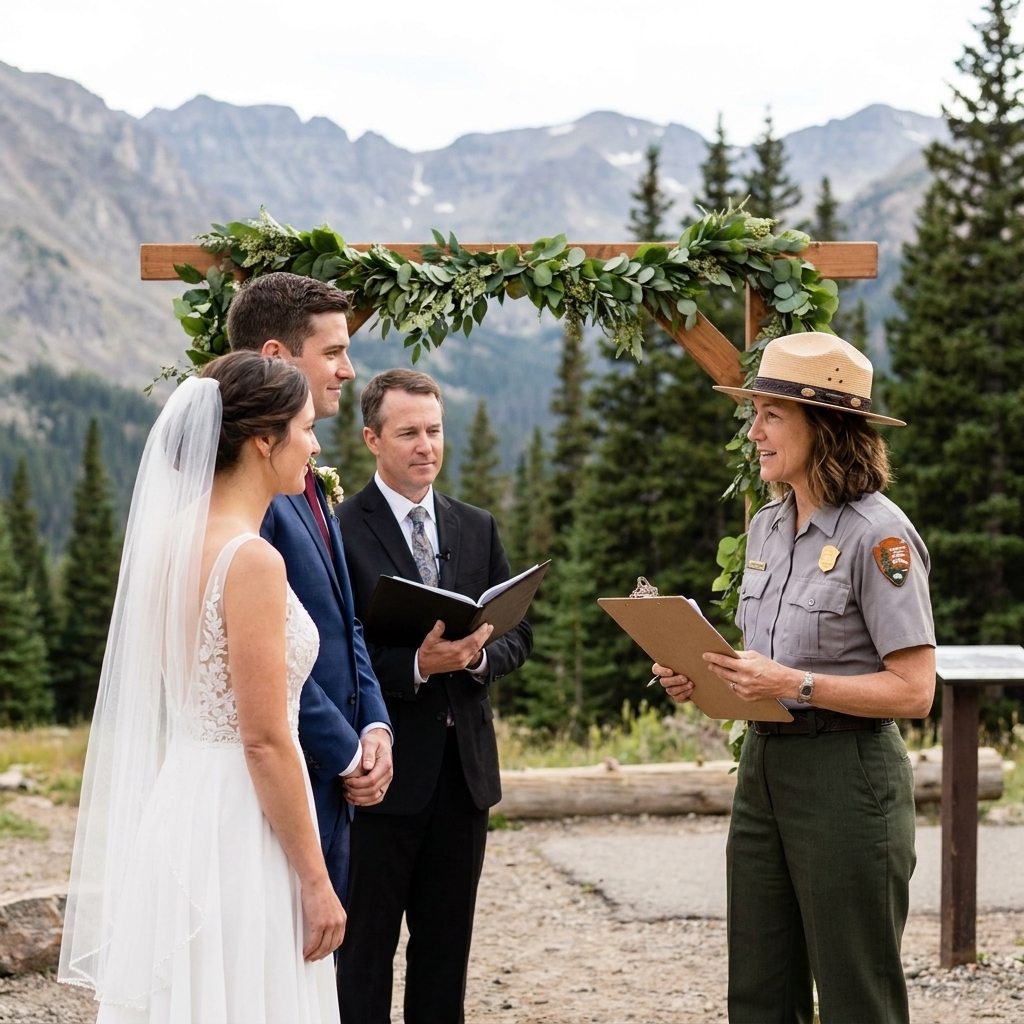
After the ceremony
Order certified copies
Order more than one certified copy if you plan to change your name or update multiple accounts. You will be glad you did.
If you are changing your name
Name change steps vary by country and region. In the U.S., many people update records in this general order: Social Security, DMV or state ID, passport (timing can depend on travel plans), employer and payroll, bank accounts, insurance, utilities, and subscriptions. Use the sequence that fits your timeline and travel needs.
Preserve the day
- Create a small photo album, not just a gallery link
- Frame one image for your bedroom, not the hallway
- Save your vows in a keepsake box with your invitation or permit
Elopement FAQ
Can we get legally married in one state and have a ceremony in another?
Yes. Many couples do a legal ceremony close to home and then have a symbolic ceremony elsewhere. If you do this, be clear with your officiant and photographer about what is legal versus symbolic, and decide which date you will celebrate as your anniversary.
Do we need witnesses if it is just us?
Sometimes yes, sometimes no. This depends entirely on the state and county. If witnesses are required, your photographer or coordinator may be able to serve, or your officiant may have options. Confirm early.
Is a friend ordained online allowed to officiate?
In many places, yes, but it is not universal. Some jurisdictions do not recognize certain online ordinations, and others require officiants to register or be authorized before the ceremony. Check the county rules before assuming it will work.
How far in advance should we plan?
If you are eloping locally with minimal vendors, you can plan in a few weeks. If you are traveling, need permits, or want a specific photographer, 3 to 9 months is a comfortable window.
What if the weather is bad?
Have a backup plan you genuinely like, not a “fine, I guess” option. A covered porch, a pretty indoor spot at your lodging, or a private room at a restaurant can still feel romantic and intentional.
A gentle final note
Your elopement is not a performance. It is a promise. If you make the legal pieces solid, and then build the day around the two of you feeling present, you will walk away with what matters most: a marriage that began with care.
If you are planning right now, open a notes app and write three words you want your day to feel like. When decisions get noisy, those three words will bring you home.